Eurosatory 2022: Avon Protection unveils EXOSKIN CBRN protection range

Avon Protection has developed a new range of products to protect military personnel operating in CBRN environments: the EXOSKIN-B1 High Traction CBRN Boots and EXOSKIN-G1 Tactile CBRN Gloves.

The CBRN threat is a growing concern for military forces, with the use of chemical weapons rising among both state actors and terrorist groups. In response, Avon Protection developed the EXOSKIN range of boots and gloves to supplement its CBRN respiratory protection products to protect personnel without compromising the wearer’s tactical agility in the field.

Designed to allow for the handling and operation of electronic touch screen devices, the EXOSKIN-G1 glove offers a critical operational advantage. The ambidextrous glove features a rubberised outer layer textured to maintain grip in wet conditions, with an intelligent, seamless inner knitted liner that has a conductive tip on both the thumb and forefinger. Together these layers optimise the wearer’s dexterity and allow them to complete their mission safely.

The EXOSKIN-B1 boot provides improved durability and agility in the field, with quick-release straps to secure the garment over standard footwear. A highly textured sole improves the wearer’s manoeuvrability in all underfoot conditions. In addition, it is 100 percent leak tested.

Manufactured from Avon Protection’s proven rubber technology, both the EXOSKIN-G1 glove and EXOSKIN-B1 boot offer Chemical Warfare Agent and Toxic Industrial Chemical protection and are impermeable to biological agents. Designed for quick donning and doffing, they integrate with many protective suit ensembles including JSLIST and MkIVA.

“Since the end of the Cold War, many nations have become more aware of the CBRN threats faced on the modern battlefield as we continue to see nerve agents and chemical weapons deployed in the field,” said Steve Elwell, Vice President Europe, Middle East, Africa and Asia for Avon Protection. “Personnel must be able to operate safely on a contaminated battlefield without relying on cumbersome protection measures.”

“In developing the EXOSKIN range of CBRN protective garments, our focus was to optimise end-user versatility in the most demanding environments, while continuing our relentless pursuit to keep operators safe from these chemical and biological threats.”

With more than 100 years of experience delivering innovatively designed and engineered CBRN solutions, the EXOSKIN range leverages Avon Protection’s material science capability and deep knowledge of protective CBRN technology.

The EXOSKIN range will be on display at Eurosatory along with Avon Protection’s full range of personnel protective equipment, including full-face respirators, escape hoods, SCBA systems, modular PAPR units, underwater equipment and ballistic helmets.


CBRNe, Protection

Iran removes IAEA cameras

It has been reported today that Iran has told the IEAE that it is removing 27 surveillance cameras from its nuclear facilities. The move comes after the IAEA censured Iran for not answering questions about traces of uranium found at three undeclared sites. 

IAEA Director General Rafael Grossi said 40 cameras would remain, but that the move posed a "serious challenge". Unless this move is reversed within three to four weeks, he warned, it would deal a "fatal blow" to the Iran nuclear deal.

Under a 2015 agreement, Iran agreed to limit its nuclear activities and allow continuous monitoring by the IAEA's inspectors in return for relief from economic sanctions. The agreement has been close to collapse since the US pulled out unilaterally and reinstated sanctions four years ago and Iran responded by breaching key commitments. The US now wants to rejoin the deal if Iran returns to compliance, but negotiations on the matter have stalle. 

Accroding to the BBC "On Wednesday, the IAEA's 35-nation board of governors approved a resolution that expressed "profound concern that the safeguards issues" related to the undeclared sites "remain outstanding due to insufficient substantive co-operation by Iran". It also urged the country to "act on an urgent basis to fulfil its legal obligations". The US, UK, France and Germany, which drafted the text, said in a joint statement that they welcomed "the overwhelming majority vote" in favour of the resolution, which they said sent "an unambiguous message to Iran".

Nuclear

DHS S&T Feature Article: Unmanned Vehicles Could Lead the Way in Dangerous Rescue Situations

First responders frequently encounter situations where an incident scene could be either potentially toxic, like an industrial accident, or physically dangerous, like a collapsed building or crumbling hillside. In these instances, the job still needs to get done, despite any personal risk—because lives could hang in the balance. The Science and Technology Directorate (S&T) is facilitating important research and development specifically for these situations, providing solutions that will allow responders to send unmanned vehicles in first to assess the environments, help chart the best path forward, and deliver lifesaving supplies and communications to survivors. 
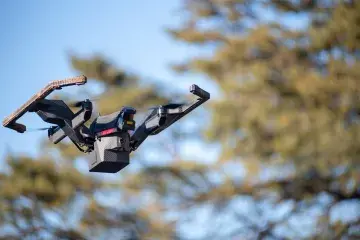
Pegasus II Transformable Air-Ground Robotic System drone flying through the air. In the background – the leaves and branches of trees
Pegasus II Transformable Air-Ground Robotic System.

“We are driven by the requirements and needs the first responders articulate. This is about developing the tools they need,” said S&T Program Manager Maua Karen Johnson, who is leading an effort to develop a new system that could help first responders save lives without putting their own in jeopardy. Called the Remote and Rapid Recue Capability (3RC), the program is working to incorporate Unmanned Aerial Vehicles (UAV) and Unmanned Ground Vehicles (UGV) into day-to-day rescue operations—something responders themselves indicated was a top priority. 

UAV and UGV (commonly called drones by air or by land) are becoming more and more a part of our world. As prices decrease and functionality increases, these tools are remaking our world and how we interact with it. They are also quickly becoming a staple for emergency response.
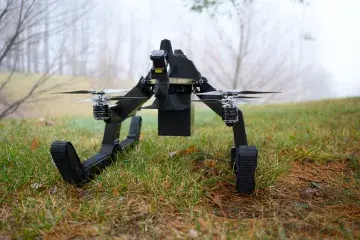
Pegasus III Transformable Air-Ground Robotic System drone on the ground moving along a field of short grass on it’s treads. In the background – a grassy hill and a few trees.
Pegasus III in ground mode.

S&T is working with industry partner Robotic Research to leverage this technology for first responders. They are developing an integrated system of ground and aerial autonomous vehicles that can independently, or working together, provide them with logistical support, search and rescue capabilities, and much more. The system will also allow responders to deliver emergency aid and communicate with civilians in high-risk locations. The system being developed through the 3RC Program is called the Transformable Marsupial Robotic Rescue System (TraMRRS), which makes use of Robotic Research’s Pegasus Transformable Air-Ground Robotic System. The Pegasus can fly and it can move along the ground. It can fly up to a culvert, roll down the inside of the pipe to the other side, and then continue on by flying again. The Pegasus can also link with three or more other Pegasuses using its advanced artificial intelligence to autonomously coordinate a search. While many first responder agencies are experimenting with drones, there is currently very little in the commercial marketplace that can fill as many different roles and address this variety of missions. The 3RC Project will employ a transformable UAV carried by a larger, multiple-terrain UGV host.

David Saitta, Hazardous Material and Safety Officer for the Burnham, Illinois, Fire Department, thinks one of the huge potential benefits of this new system is the capability to carry supplies to a victim. “Having an aerial drone that can not only locate a victim, but then has the ability to bring equipment to the victim at the scene, that would be incredibly useful.” The aerial drone could potentially bring lights, flotation devices, communication equipment so that victims can speak with rescuers, and basic medical supplies, and these things could be brought to the victim even before the rescue team has suited up to get to the scene. Imagine someone injured in an industrial accident, or the crash of a train or truck carrying potentially hazardous materials. This system would be able to find and establish communications with trapped individuals and deliver first aid supplies immediately while command is still assessing what exposure risk rescuers are facing. 

“In order for victims to have the best chance for recovery it is vital to get them to a trauma center within the first hour,” said Steve Vandewalle, helicopter rescue medic with the San Diego Fire Department and member of S&T’s first responder Resource Group. “Transport is the most important part of responding, and access is often the most difficult part of providing transport.”

“3RC is a tool that can be deployed to a ‘hot zone’,” Vandewalle continued. “It could be a dangerous situation, like a chemical spill, with multiple casualties—I don’t want to send my team into a situation where they could be poisoned or contaminated. We may not know what the situation is at all, and this system can get in there and start providing information and assistance right away.”  

In addition to operating an autonomous drone to seek, find and bring aid and communications to victims, there is also a UGV, which responders can use to provide transport and a mobile base for the aerial drone, with a landing platform and extra batteries, moving it close to the search area. This part of the system carries heavier supplies than a flying drone can accommodate, weight that responders do not have to put on their backs, easing access over rough terrain and reducing exertion and fatigue so that they can stay in the field longer. 
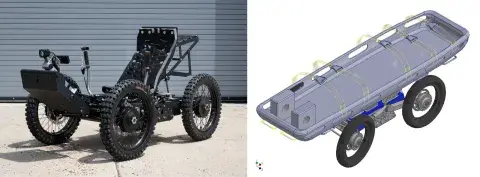
Two images. On the left, the Outrider Coyote 4wd vehicle, an unpadded full back seat on a supporting structure with large black Wheels. parked motionless on concrete. In the background – a large gray loading door in the closed position. On the right, an illustration of the proposed Unmanned Ground Vehicle with a gray stretcher on top of a supporting structure with large black wheels.
Left: The Outrider Coyote 4wd vehicle that is being modified for use as the UGV. Right: an illustration of the UGV with a stretcher attached.

The UGV can also be used as a moving stretcher, carrying casualties out of dangerous or compromised terrain. This capability alone will be a huge benefit, as carrying a victim away to safety could take two or three first responders and be very taxing and time consuming. The system can also be supplemented by WarLoc, a hands-free tracking device is that is worn by a first responder and allows the UGV to automatically follow the person wearing it. If the responder goes down a route that the UGV can’t traverse, it will find a different route that it can manage automatically and still follow the rescuer.
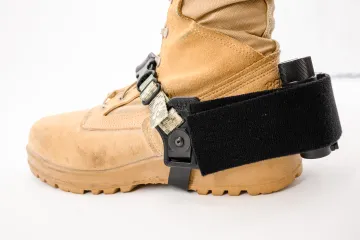
A desert tan combat boot with the WarLoc tracking device attached to it. The device is positioned at the back of the heel and held in place with large black straps.
WarLoc. Autonomous drones can track and follow a rescuer using this wearable.

As a helicopter rescue medic, Vandewalle understands how effective air rescue is, but also knows its limitations. “We are one fog bank away from not being able to deploy.” Fog or other severe weather conditions at a helicopter’s home base means that it would be unavailable to respond anywhere in the area, even if the weather at the incident scene is just fine. 3RC can be brought to the scene and then deployed. 
  
According to Vandewalle, about 70% of fire departments around the country are volunteer, and these agencies tend to have less funding and fewer resources. This system would most likely be part of regional cooperation agreements, where a smaller, less equipped department calls on a larger agency nearby for assistance in an emergency. These kinds of agreements are common today. Vandewalle’s helicopter unit in San Diego is part of this type of arrangement. 

Saitta says that his Burnham Fire Department, which is in the suburbs of Chicago, is also part of a regional mutual assistance agreement. This means that a single system could provide support far beyond the agency that purchases and operates it. 

Saitta brought up several real-world incidents he has seen that would have benefitted from having this system in place. One was a severe blizzard in 2013, with several inches of snow. There were many vehicles stuck and abandoned along impassable roadways and the UGV could have assisted us by carrying equipment and extricating any patients to awaiting ambulances. Another was a tornado that hit a mobile home park in 2020. Downed trees and debris made accessibility very difficult, and again, having a carryall for tools and supplies, as well as being able to transport casualties would have been very helpful.

Vandewalle also has experience with casualties in crowded urban events. “San Diego has large, well-attended events in a downtown area called the Gaslamp District. If someone is in distress somewhere in the middle of a crowded area it can be extremely difficult to get emergency vehicles to the scene. A first responder with a UGV following them, a UGV that can also carry the victim out of the crowd to a waiting ambulance, could make a big difference.”

Johnson and her team are currently working with Robotic Research and the responders to design, build, and refine two 3RC prototypes by spring 2023.

Drone

CBRNE IG Membership Engagement Exhibition

The CBRNE Industry Group Engagement Exhibition meeting is a widely attended gathering which is expected to be attended by a large number of people representing a wide range of CBRNE interests. It is open to members from throughout the industry who will provide expected attendees an opportunity to exchange ideas and views.

Jun 16, 10:00 AM – 1:00 PM Richlin Event Center, click here to find out more.

CBRNe World will be there, come and check out our booth!


Event

2022 CBD S&T CONFERENCE  

The Chemical and Biological Defense Science & Technology (CBD S&T) Conference brings together the most innovative and influential chemical and biological defense community members from around the world to share insights and collaborative ideations on the pressing chem-bio threats of tomorrow.

Join the Defense Threat Reduction Agency’s (DTRA) Chemical and Biological Technologies Department, in its role as the Joint Science and Technology Office (JSTO) for the Chemical and Biological Defense Program, as we explore change-making concepts in the chem-bio defense landscape. 

The 2022 CBD S&T Conference will be held December 6-9, 2022, at the Moscone Center in San Francisco, California.

For detailed information on topics and submission, visit the Call for Papers. Subscribe to our mailing list and follow us across our social media channels to stay up-to-date on conference related information.

More information about the conference can be found here

Event

Argon Electronics has launched the Radsim Source App for the GS series simulation Gamma sources.

Argon Electronics has launched the Radsim Source App for the GS series simulation Gamma sources.

When planning a radiological exercise, it is common practice to represent a specific source activity level. Alternatively, the instructor may wish students to detect a particular reading at a known distance from the source that works perfectly within the constraints of the training environment, planned scenario, or exercise area.

The Radsim Source App enables detection of a particular reading by hosting customisable simulated activity settings for Argon GS Series simulation Gamma sources.

This easy to use App enables the user to:

  • Select units of measurement for simulated activity, dose rate, and distances
  • Decide upon and set your simulated activity level
  • Set the desired reading for the student to experience at a specific distance. This should be in an unobstructed line of sight from the source; the App will then automatically calculate and set the required activity level

Once the simulated activity levels are set, the simulation source remembers them, even when the device is switched off. Settings only need to be reprogrammed if the user’s requirements change. Simulation sources can all be set to the same configuration, or they can be set differently.

The App can be used to configure the nine pre-set simulated activity levels for the GS4 series simulation gamma sources.

Neutron capability

For exercises that need to simulate Neutron activity to generate readings on the appropriate simulators, the App enables the desired activity or count rate to be set based upon distance from the simulation source – Ideal for use with our HRM simulator

Download the Radsim Source App product sheet

Platform

Free download for Android™ devices via the Google App store.

Teledyne FLIR and Teledyne GFD show firefighting innovations from the same booth at Interschutz

Two of the world’s innovators in fire/gas detection and monitoring technologies will share a booth at Interschutz 2022, providing a convenient one-stop-shop for those seeking advanced solutions that protect citizens, buildings and firefighters. Teledyne FLIR, a specialist in thermal imaging cameras and sensors, and Teledyne Gas and Flame Detection, will be present in hall 27, booth H18 at the exhibition, which takes place in Hanover, Germany on 20-25 June.

TF-Interschutz.png

As the world’s leading trade fair for the fire and rescue industries, both Teledyne FLIR and Teledyne Gas and Flame Detection will showcase a number of proven products that improve fire/gas identification and monitoring. Two brand new innovations will also be on the booth, bringing even more capabilities to the firefighting arena.

Among the class-leading products on display from Teledyne FLIR will be its K-series cameras, developed specifically to meet the demanding requirements of firefighting. The full range will be on the booth, starting with the K1 situational awareness camera that serves as an extra set of eyes on the fire scene, allowing commanders, officers and inspectors to complete a rapid yet thorough 360° assessment in total darkness and through smoke. Also on display will be the K2 compact thermal imaging camera (TIC) featuring Teledyne FLIR’s patented Multi-Spectral Dynamic Imaging (MSX®) technology, which produces richly-detailed thermal images by bringing together the visual and thermal spectrum.

Further TICs sure to attract the attention of Interschutz visitors will include the high-performance K33, K45, K53 and K55, with advanced features and functions to suit different requirements. The K65 NFPA-compliant will also be in the spotlight, as will the C5 compact thermal camera, which is ideal for identifying potential fire hazards such as hot fuses. In addition, booth visitors will see examples of Teledyne FLIR’s in-truck thermal camera chargers, along with a small representation of PVS series multi-purpose night vision monoculars, ITS thermal imaging cameras for traffic monitoring applications, and early fire detection solutions. Regarding the latter, Teledyne FLIR integration partner, MoviTHERM, has developed a thermal monitoring system that can detect rising temperatures before fire has the chance to spread.

Moving to sister company Teledyne Gas and Flame Detection, two new portable solutions will take centre stage at Interschutz. First up is the new Gas Laser, a device that adds remote natural gas detection capabilities to firefighting activities, enhancing safety and improving detection for fire services and first responders. Users can perform a quick scan of common venting points from distances of up to 30m.

Another new product is GT Fire, which increases gas detection capabilities as firefighters can isolate leaks with greater accuracy while they wait for the utility company to arrive. With GT Fire, those in attendance can use the additional information to secure a scene more effectively.

Elsewhere on the booth, visitors will find other portable solutions such as the popular and compact Protégé ZM single gas monitor, and the PS200 four-gas monitor.

Fixed solutions on display from Teledyne Gas and Flame Detection are set to include the MX 32, a compact gas controller that takes analogue and digital inputs to meet the demands of various firefighting applications. Also on show will be the OLCT10N digital detector for combustible gases, toxic gases or oxygen, as well as the DF-TV7 series flame detector.

Whatever the requirement, a small investment in these innovative solutions from Teledyne FLIR and Teledyne Gas and Flame Detection can pay big returns, helping to save lives, protect buildings and ensure firefighter safety. Interschutz visitors are welcome to discuss their specific challenges and requirements with either company, both of which will have an experienced and knowledgeable team on the booth.As the world’s leading trade fair for the fire and rescue industries, both Teledyne FLIR and Teledyne Gas and Flame Detection will showcase a number of proven products that improve fire/gas identification and monitoring. Two brand new innovations will also be on the booth, bringing even more capabilities to the firefighting arena.

Among the class-leading products on display from Teledyne FLIR will be its K-series cameras, developed specifically to meet the demanding requirements of firefighting. The full range will be on the booth, starting with the K1 situational awareness camera that serves as an extra set of eyes on the fire scene, allowing commanders, officers and inspectors to complete a rapid yet thorough 360° assessment in total darkness and through smoke. Also on display will be the K2 compact thermal imaging camera (TIC) featuring Teledyne FLIR’s patented Multi-Spectral Dynamic Imaging (MSX®) technology, which produces richly-detailed thermal images by bringing together the visual and thermal spectrum.

Further TICs sure to attract the attention of Interschutz visitors will include the high-performance K33, K45, K53 and K55, with advanced features and functions to suit different requirements. The K65 NFPA-compliant will also be in the spotlight, as will the C5 compact thermal camera, which is ideal for identifying potential fire hazards such as hot fuses. In addition, booth visitors will see examples of Teledyne FLIR’s in-truck thermal camera chargers, along with a small representation of PVS series multi-purpose night vision monoculars, ITS thermal imaging cameras for traffic monitoring applications, and early fire detection solutions. Regarding the latter, Teledyne FLIR integration partner, MoviTHERM, has developed a thermal monitoring system that can detect rising temperatures before fire has the chance to spread.

Moving to sister company Teledyne Gas and Flame Detection, two new portable solutions will take centre stage at Interschutz. First up is the new Gas Laser, a device that adds remote natural gas detection capabilities to firefighting activities, enhancing safety and improving detection for fire services and first responders. Users can perform a quick scan of common venting points from distances of up to 30m.

Another new product is GT Fire, which increases gas detection capabilities as firefighters can isolate leaks with greater accuracy while they wait for the utility company to arrive. With GT Fire, those in attendance can use the additional information to secure a scene more effectively.

Elsewhere on the booth, visitors will find other portable solutions such as the popular and compact Protégé ZM single gas monitor, and the PS200 four-gas monitor.

Fixed solutions on display from Teledyne Gas and Flame Detection are set to include the MX 32, a compact gas controller that takes analogue and digital inputs to meet the demands of various firefighting applications. Also on show will be the OLCT10N digital detector for combustible gases, toxic gases or oxygen, as well as the DF-TV7 series flame detector.

Whatever the requirement, a small investment in these innovative solutions from Teledyne FLIR and Teledyne Gas and Flame Detection can pay big returns, helping to save lives, protect buildings and ensure firefighter safety. Interschutz visitors are welcome to discuss their specific challenges and requirements with either company, both of which will have an experienced and knowledgeable team on the booth.

Ministry of Defence’s Science and Technology Initiative

The Defence Science and Technology Portfolio is a series of programmes and standalone projects designed to meet the Ministry of Defence (MOD)’s capability needs and to ensure the UK armed forces remain at the cutting edge of technology.

To deliver on the scale and ambition set out by the MOD’s Chief Scientific Adviser will require a whole-of-UK effort as well as collaboration and cooperation from international allies.

Sustaining strategic advantage through science and technology (S&T) is the first objective of the UK’s combined security, defence, development and foreign policy.

Over the next 4 years, the MOD will invest at least £6.6 billion in research and development (R&D) and this Science and Technology Portfolio will ensure defence sustains operational advantage, can make the right decisions, and generate prosperity for the UK.

Predominantly, the following programmes and projects will be delivered by the Defence Science and Technology Laboratory (Dstl), but partners in industry and academia will be crucial to delivery with significant funding available and opportunities to collaborate.

The portfolio has been designed by Defence Science and Technology in partnership with our stakeholders to ensure MOD’s science and technology activities:

  • address defence’s capability priorities
  • enable a decisive UK technological edge
  • allow defence to understand the future
  • sustain sovereign and critical capabilities
  • balance challenge-driven research with exploratory research

Chemical Biological and Radiological (CBR) Defence

Vision

Outpacing chemical, biological, radiologicial and nuclear (CBRN) adversaries and threats through cutting-edge science to provide operational advantage for UK defence and security.

Technical challenges

The technical challenges of this programme are to:

  • understand: a sovereign capability to assess, understand and anticipate risks for CBR defence, security and resilience
  • prevent: actions to engage and constrain adversaries are driven by scientific evidence and analysis; effects are delivered with cutting edge capabilities
  • protect and recover: capability development is underpinned by scientific evidence and analysis; cutting edge capabilities are assured and evaluated

Capabilities

Delivery of this programme requires:

  • CBR diagnostics and medical countermeasures
  • CBR sensing
  • CBR situational awareness
  • CBR counter-proliferation
  • CB analysis and attribution
  • CBR operational response
  • radiation protection
  • CBR hazard assessment
  • CBR hazard management
  • CBR physical protection

Benefits to UK defence and security

This programme will:

  • deliver science and technology to achieve operational advantage
  • achieve evidenced and effective decision making using science and technology
  • achieve strategic influence and enhanced science and technology delivery through collaboration

Commercial routes

You can also engage with us via the UK Industry’s Chemical, Biological, Radiological and Nuclear Defence Special Interest Group (CBRN-UK)

Point of contact

National Terrorism Advisory System Bulletin - June 07, 2022

Published By: https://www.dhs.gov/
Date Issued: June 07, 2022 09:00 am ET
View as PDF:  National Terrorism Advisory System Bulletin - June 07, 2022 09:00 am

Summary of Terrorism Threat to the United States

The United States remains in a heightened threat environment, as noted in the previous Bulletin, and several recent attacks have highlighted the dynamic and complex nature of the threat environment.  In the coming months, we expect the threat environment to become more dynamic as several high-profile events could be exploited to justify acts of violence against a range of possible targets. These targets could include public gatherings, faith-based institutions, schools, racial and religious minorities, government facilities and personnel, U.S. critical infrastructure, the media, and perceived ideological opponents.  Threat actors have recently mobilized to violence due to factors such as personal grievances, reactions to current events, and adherence to violent extremist ideologies, including racially or ethnically motivated or anti-government/anti-authority violent extremism.  Foreign adversaries—including terrorist organizations and nation state adversaries—also remain intent on exploiting the threat environment to promote or inspire violence, sow discord, or undermine U.S. democratic institutions.  We continue to assess that the primary threat of mass casualty violence in the United States stems from lone offenders and small groups motivated by a range of ideological beliefs and/or personal grievances.

Duration

Issued:   June 07, 2022 09:00 am
Expires:   November 30, 2022 02:00 pm

Additional Information

Key aspects of the evolving threat environment include:

Several recent violent attacks by lone offenders against minority communities, schools, houses of worship, and mass transit have demonstrated the dynamic and complex nature of the threat environment facing the United States:

  • Individuals in online forums that routinely promulgate domestic violent extremist and conspiracy theory-related content have praised the May 2022 mass shooting at an elementary school in Uvalde, Texas and encouraged copycat attacks.  Others have seized on the event to attempt to spread disinformation and incite grievances, including claims it was a government-staged event meant to advance gun control measures.
  • The suspect in the grocery store attack in Buffalo, New York in May 2022 claimed he was motivated by racist, anti-Black, and anti-Semitic conspiracy theories, often referred to as the “great replacement” or “white genocide.”  These theories claim that minorities, multiculturalists, and a ruling elite are deliberately threatening the existence of the white race.  The alleged 2019 attacker at a Walmart in El Paso, Texas cited similar grievances and inspiration for the attack, and both the Buffalo and El Paso attackers indicated they were inspired by the 2019 attacker of two mosques in Christchurch, New Zealand.
  • A violent attack in May 2022 in Laguna Woods, California targeted congregants of a church that serves the Taiwanese community.  The attack killed one individual and wounded five others.  According to the lead investigative agency, the suspect also placed Molotov cocktail-like devices around the church and secured the doors with chains and super glue.
  • In April 2022, an individual wearing a gas mask threw two smoke canisters and opened fire on a New York City subway during morning rush hour, resulting in injuries to dozens of individuals.  Following the shooting, a number of pro-al-Qa‘ida and ISIS users celebrated the attack, which remains under investigation.

The continued proliferation of false or misleading narratives regarding current events could reinforce existing personal grievances or ideologies, and in combination with other factors, could inspire individuals to mobilize to violence.

  • Some domestic violent extremists have expressed grievances related to their perception that the U.S. government is unwilling or unable to secure the U.S.-Mexico border and have called for violence to stem the flow of undocumented migrants to the United States.  We assess that there is increased risk of domestic violent extremists using changes in border security-related policies and/or enforcement mechanisms to justify violence against individuals, such as minorities and law enforcement officials involved in the enforcement of border security.
  • Given a high-profile U.S. Supreme Court case about abortion rights, individuals who advocate both for and against abortion have, on public forums, encouraged violence, including against government, religious, and reproductive healthcare personnel and facilities, as well as those with opposing ideologies.
  • As the United States enters mid-term election season this year, we assess that calls for violence by domestic violent extremists directed at democratic institutions, political candidates, party offices, election events, and election workers will likely increase.

Foreign adversaries remain intent on exploiting the dynamic threat environment to sow discord, undermine U.S. democratic institutions, and promote or inspire violence by their supporters.

  • Following the January 2022 hostage situation at a synagogue in Colleyville, Texas, ISIS and al-Qa'ida supporters released statements celebrating the hostage taker for bringing attention to the issue of a federally convicted female al-Qa'ida supporter and suggested the event could serve as inspiration for future attackers.  Foreign terrorist organizations will likely continue to use online platforms to attempt to inspire U.S.-based individuals to engage in violent activity.
  • In April 2022, ISIS released an audio message announcing a new global campaign of attacks to “avenge” the deaths of the group’s deceased leader and spokesman.  The message called on ISIS supporters to carry out knife and vehicle ramming attacks in the United States and Europe.
  • The pro-al-Qa'ida Malahem Cyber Army released the third issue of its “Wolves of Manhattan” magazine in April 2022, which focused on the ongoing conflict in Ukraine.  The magazine encouraged supporters to travel to Ukraine to acquire training and weapons to use in attacks against the West.
  • Chinese, Iranian, Russian, and other foreign malign influence actors have sought to contribute to U.S. internal discord and weaken its focus and position internationally.  These actors have amplified narratives that radicalized individuals have cited to justify violence, including conspiracy theories and false or misleading narratives promoting U.S. societal division.  In recent months, Russia and other actors have also amplified conspiracy theories alleging U.S. responsibility for the Russia-Ukraine crisis and claiming U.S. support for bio-weapons labs abroad.  Some of these actors have used these conspiracy theories to justify calls for violence against U.S. officials and institutions.
  • As the U.S. 2022 mid-term elections approach, malign foreign actors could bolster their messaging to sow discord and influence U.S. audiences in keeping with practices during previous election cycles.

How We Are Responding

DHS works with partners across every level of government, in the private sector, and in local communities to keep Americans safe, including through the following examples of our resources and support:

Resources to Stay Safe

Stay Informed and Prepared


Deadly fire exacerbated by mis-labelled chemicals

 A massive fire at a container depot near a port city in southeastern Bangladesh has killed at least 49 people, including nine firefighters, and injured more than 100 others. The fire, which took 3 days to get under control was, according to Bangladeshi officials, exacerbated by the incorrect labelling of chemicals stored in the depot. 

Officials have said that containers of hydrogen peroxide were labelled incorrectly - and firefighters doused flames with water instead of foam.

Hundreds of people were injured or are still missing in the disaster at BM Container Depot in Sitakunda, 40km (25 miles) from Chittagong, and the number of dead is expected to rise. 

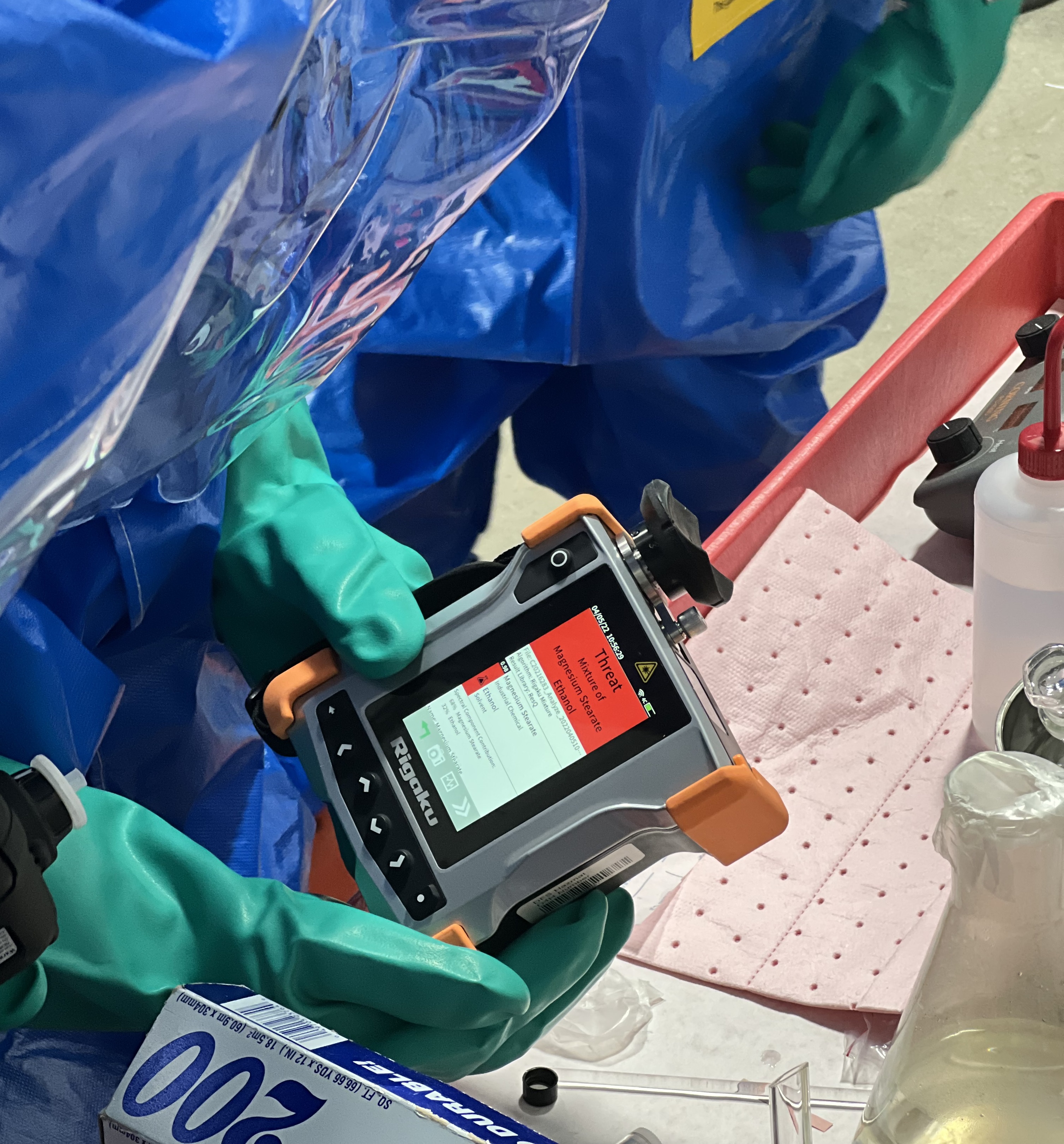
Second Generation Handheld Raman Analyzer from Rigaku Analytical Devices Chosen as Part of the U.S. JPEO CBRND Program to Modernize the Military’s DR SKO Systems

Rigaku Analytical Devices, a U.S.-based leading pioneer of handheld 1064 nm-Raman based spectrometers, is pleased to announce the Rigaku ResQ CQL 1064 nm Raman analyzer has been accepted for chemical identification as part of the U.S. Joint Program Executive Office for Chemical, Biological, Radiological and Nuclear Defense (JPEO CBRND) Program to modernize the military’s Dismounted Reconnaissance Sets, Kits and Outfits (DR SKO) systems.  The DR SKO System Modernization program deploys new and improved kits of technology to Department of Defense (DoD) locations around the world for characterization of suspected chemical, biological, radiological, and nuclear (CBRN) hazards. 

Rigaku’s original handheld 1064 nm Raman-based analyzer, the ResQ, was selected into this program in 2019 as part of a tech refresh program led by the DoD’s JPEO-CBRND Program.  Following extensive head-to-head evaluations of a variety of technologies, Rigaku’s portfolio was chosen based on its accuracy, ease of use, ruggedness, and features.

The Rigaku ResQ CQL analyzer was launched in 2018, and offers users advanced analytical chemical analysis in a new, tactical form factor.  Rigaku’s 1064 nm Raman-based technology is in use by first responders, border protection, law enforcement, and the military located around the world for identifying chemical threats – such as explosives, chemical warfare agents (CWAs), precursor chemicals, household hazardous chemicals, narcotics, and more. 

Rigaku ResQ CQL

Unique features to the Rigaku product line include 4C Technology which monitors individual results for precursors that could be used in recipes to manufacture greater threats.  The optional QuickDetect Mode allows for the detection of non-visible amounts of a substance based on automated colorimetric technology available on-board the ResQ CQL.  This provides both detection and identification on one device – not available on any other Raman analyzer.

“Rigaku is at the forefront of chemical threat analysis,” said Bree Allen, President of Rigaku Analytical Devices.  “The ResQ CQL represents the next advancement in our product portfolio, and we are proud it will be part of the new chemical response toolkits used by our defense forces.

The ResQ CQL analyzer is supported by Rigaku’s global sales and support distribution channels, offering 24/7 Reachback support, library updates and software upgrades for the life of the analyzer.

For more information on the ResQ CQL, please visit www.rigakuanalytical.com

German prosecuted for sale of CW to Russia

DW reported the following: 

A German businessman accused of exporting armaments for Russia's chemical and nuclear weapons program appeared before the Higher Regional Court of Dresden on Tuesday. The man is accused of violating the War Weapons Control Act and the Foreign Trade and Payments Act and has been in custody since May 2021. Prosecutors allege that since 2017, Alexander S.  attempted to "promote the production of chemical weapons" by brokering the delivery of equipment from a Chinese manufacturer to Russia, in violation of the War Weapons Control Act. The accused was also alleged to have exported goods ten times without a necessary license and was also accused of acting "for the secret service of a foreign power." German officials say the defendant is a managing director of a trading company in Saxony. Since 2017, he was alleged to have sold goods worth around €1 million ($1.07 million) via a Russian firm believed to be directed by the Russian secret service. Prosecutors say the accused knew that the exported items could be used in both civilian and military sectors and could also be used in the development of "ABC weapons" — short for atomic, biological and chemical weapons.  The man is alleged to have tried to conceal the destination of the consignments by providing fake receipts.

Our Current Partners