908 Devices Inc. announced it had received a $1.7 million order from the Ministry of Health of Ukraine for its MX908 handheld mass spectrometry device with Aero module for priority shipment in the first quarter 2025. The devices will be part of an environmental testing kit in a post-war environment and will be used primarily to detect and identify trace substances of hazardous materials, including explosives.
The MX908 handheld device utilizes the company’s proprietary High Pressure Mass Spectrometry (HPMS) technology to detect and identify hazardous substances including chemical agents, explosives, and priority drugs at trace levels. The Aero module delivers additional capability to the MX908, enabling response teams to quickly detect and identify aerosolized threats, such as chemical warfare agents, pharmaceutical based agents and opioid analogs.
ProPac, a trusted leader in disaster preparedness and emergency response solutions since 1989, continues to set the standard in emergency management with its latest innovations: the Inflatable Decontamination Cube and Decontamination Lane System. These advanced, fully plumbed decontamination units provide rapid deployment solutions for emergency response teams, public health agencies, and HAZMAT professionals nationwide.
With a foundation built on military logistics and over three decades of experience supporting emergency responders, ProPac understands the critical need for efficient, user-friendly, and rapidly deployable decontamination systems. These solutions are designed to meet the challenges of first responders in high-stakes environments.
Innovative Decontamination Solutions
Decontamination Cube: Single-Person System
Inflates in under 2 minutes for quick deployment.
Fully plumbed with an integrated shower system, featuring seven nozzles and an adjustable handheld sprayer.
Removable containment berm, pump and elevation grids for water management.
Compatible with any standard Garden Hose Thread (GHT) water supply.
ANSI/ISEA 113-2013 compliant for safety.
Flexible hook-and-loop system for easy wall and ceiling removal.
Integrated clothing chute for easy disposal of contaminated materials.
QR code-linked online training videos for easy team member onboarding.
Constructed from chemical-resistant PVC with durable RF-welded seams (no glue).
Decontamination Lane: Multi-Stage System
Deploys in under 3 minutes with minimal personnel.
Features three zones for doffing, decontamination, and donning.
Includes a complete plumbing system with high-pressure (up to 150 PSI) and polypropylene spray nozzles.
Equipped with sump pumps, shutoff valves, and flexible Oxford walls for adaptable configurations.
Constructed from chemical-resistant PVC with durable RF-welded seams (no glue).
Integrated clothing chute for easy disposal of contaminated materials.
QR code-linked online training videos for easy team member onboarding.
A Legacy of Innovation in Emergency Response
ProPac’s inflatable decontamination solutions reflect over 15 years of field-proven success. Designed with input from Emergency Management Agencies (EMA/OEMs), Fire Departments, HAZMAT teams, and Public Health professionals, these units address the growing need for cost-effective, rapidly deployable solutions that save time and increase efficiency during high-stress emergency situations.
“Our decontamination systems are designed for ease of use, rapid deployment, and cost-effectiveness. With input from first responders, we've made sure these solutions meet real-world needs, ensuring they’re ready to go at a moment’s notice—no complex setup required,” said Richard King, COO, ProPac.
Be Ready When It Matters Most
ProPac has supported thousands of agencies through major disasters, from Hurricane Hugo to the present day. Trust ProPac’s inflatable shelters and decontamination systems to be ready for deployment when every second counts. For more information or to schedule a demonstration, contact ProPac at or visit http://propacusa.com.
The exhibition space at High Intensity CBRN 2025 is now sold out. With over 30 exhibitors, with the latest and best there is to offer in CBRN and Hazmat response equipment make sure you don't miss out, book your palce now.
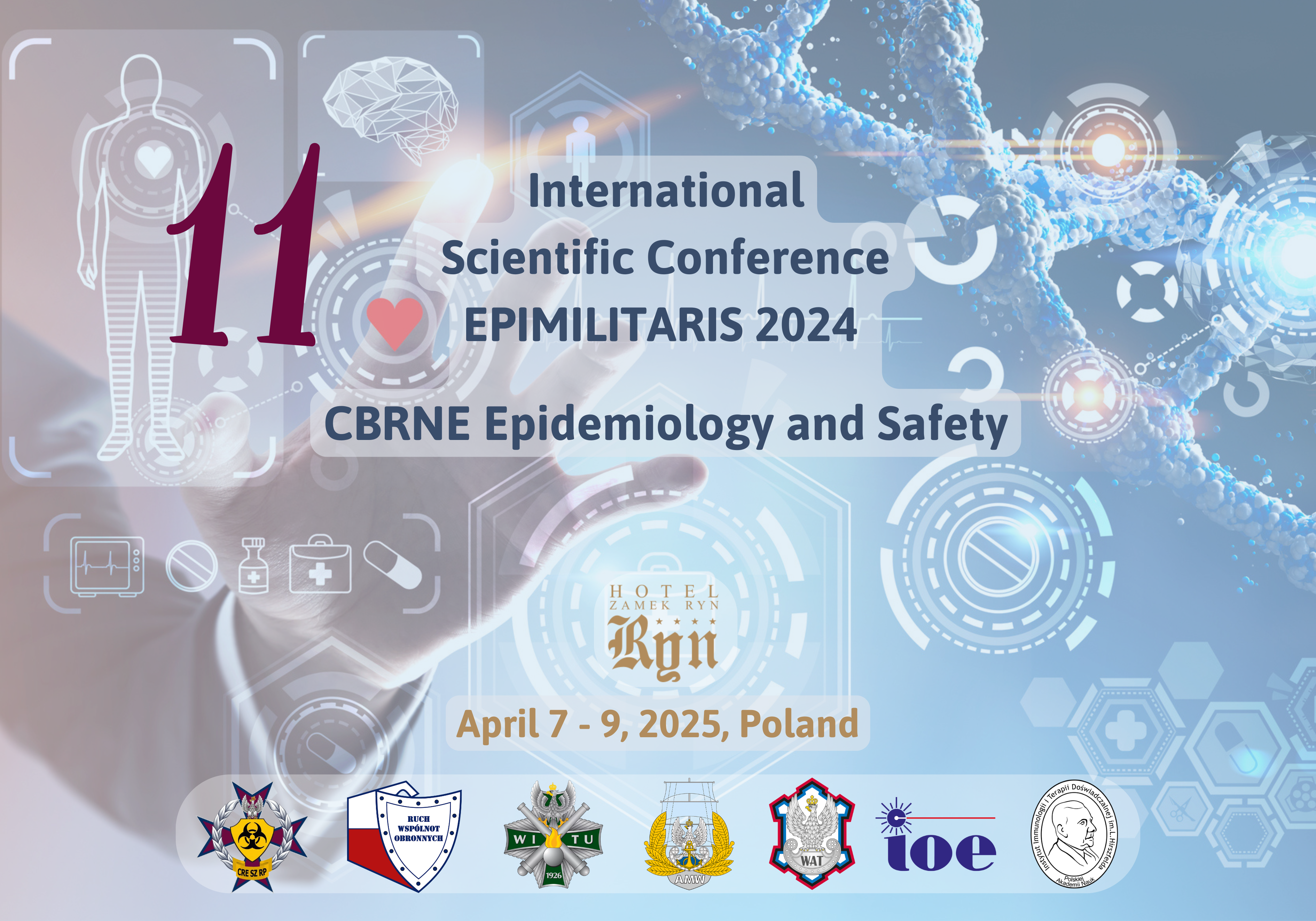
Would cordially like to invite you to take part in 11th edition of the ‘Epimilitaris’ Scientific Conference: ‘Epidemiology and CBRNE Security, which will be held on April 7-9, 2025 in Hotel ‘Zamek Ryn’ in Poland.
This year’s agenda will include the following topics:
Epidemiology of infectious and non-infectious diseases, including those that are agents of biological weapons.
Threats to public health. Experience from recent years, analyses, conclusions, proposals – epidemics, failures of critical infrastructure.
Recognition of the threat of using weapons of mass destruction. Threat monitoring, environmental reconnaissance, medical intelligence.
Identification and neutralization of CBRNE agents. Procedures, techniques, new technologies.
Procedures in a contaminated area. Forensic, triage, environmental aspects. Emergency medical services in the contaminated area. Medical evacuation from the contaminated area.
Crisis management after an incident involving CBRNE agents. Restoring capabilities.
Safety related to the use of agents containing explosives. Threats to people and infrastructure.
Preparations in the scope of CBRNE security. Non-military preparations for defence and crisis management in the national security system.
Security problems in contemporary security science. Modern techniques and technologies.
The Conference is to provide a platform to share and expand knowledge on epidemiology and CBRNE security in the context of threats to health after the use of CBRNE agents. Therefore the conference topics concern a wide range of activities undertaken throughout the process of responding to the threat: preparation and prevention, and actions performed both during the incident and also after its occurrence.
During the 11th edition, it will be especially important to summarize the experiences of the past decade and the actions taken in the process of responding to emerging threats.
As before, the program included a section for organizing thematic workshops and a poster session.
Participants (doctors, paramedics and laboratory diagnosticians) will receive educational points. Scientific reports will be published in the conference publication with ISBN number.
Visit website at www.srwo.org.pl/epimilitaris-2025 and https://creszrp.wp.mil.pl/ where you will be able to find up-to-date and necessary information. You will also be able to use these sites for the purpose of e-registration, using an online application form.
Dräger, a global leader in safety technology, proudly unveils the NIOSH-certified ProAir, an advanced closed-circuit breathing apparatus (CCBA) designed to provide a continuous oxygen supply for up to four hours. Leveraging over a century of expertise in breathing apparatus technology, this innovative solution is set to transform Federal Government operations in hazardous environments, including below-deck ship incidents, confined spaces, subterranean operations, and HAZMAT operations.
The ProAir can enhance operational readiness for federal agencies, including the armed forces, law enforcement, emergency responders, and environmental protection agencies. By providing an uninterrupted oxygen supply, the ProAir enables personnel to focus on high-risk situations, such as search and rescue missions, decontamination efforts, and HAZMAT response, alongside other critical tasks.
David Warnacut, U.S. Marine and Dräger Product Manager, states, "In high-stakes operations, having dependable and effective equipment is essential. The ProAir provides access to safe, breathable oxygen for extended periods across various operations. This enduring commitment underscores Dräger's dedication to enhancing the safety and effectiveness of our Federal agents and armed forces in the field."
The February issue of CBRNe World is now available to view online https://cbrneworld.com/magazine
Awesome cover for this issue, even if we do say so ourselves!
We have Rick Edinger talking about changes in NFPA hazmat standards, Developments in Brave Beduin, The EPA on interior vehicle decon, Zak Kallenborn on the future for drones in CBRN and much, much more...
BioFlyte has been selected by AFWERX for a Small Business Innovation Research (SBIR) Phase I contract focused on its BioTOF™ z200 dynamic threat monitoring solution to address challenges within critical infrastructure protection.
The goal of the program is to demonstrate the ability of BioFlyte’s aerosol threat detection and identification technology to protect both military personnel and infrastructure from known and emerging biological and chemical threats. BioFlyte’s BioTOF z200 is the first dynamic threat monitoring solution that is capable of early warning detection, analysis, and confirmatory identification across both the chemical and biological threat landscape. BioTOF has been proven to detect and identify all classes of particulate threats, including bacteria, viruses, biotoxins like anthrax and ricin, and pharmaceutical-based agents like fentanyl. Each test, from collection to alarm, is completed within approximately 5 minutes.
“As the threat landscape continues to evolve, critical infrastructure protection and homeland security are top of mind for our leaders in government and the military,” said Todd Sickles, CEO of BioFlyte. “We are honored to bring our life-saving threat detection and identification technology to the U.S. military through this award. We believe our scalable and powerful technology can help keep military personnel safe from dangerous chemical and biological threats.”
The Air Force Research Laboratory and AFWERX have partnered to streamline the Small Business Innovation Research (SBIR) and Small Business Technology Transfer (STTR) process by accelerating the small business experience through faster proposal to award timelines, changing the pool of potential applicants by expanding opportunities to small business and eliminating bureaucratic overhead by continually implementing process improvement changes in contract execution.
The latest High Intensity 2025 Programme is now available to view. We have a long list of excellent speakers joining us for the second iteration of High Intensity CBRN, as well as an excellent workshop hosted by the ISRP.
Adding to Indian Army’s CBRN (chemical, biological, radiological and nuclear) capabilities the force has signed a contract for the procurement of 223 Automatic Chemical Agent Detection and Alarm (ACADA) systems.
The contract was signed on 25 February 2025 with Larsen and Toubro (L&T Ltd) at a cost of Rs 80.43 crore (around 9m USD) under the Buy Indian (IDDM) category.
The Army on Tuesday said “Induction of ACADA in the field units will substantially enhance Indian Army’s defensive CBRN capability for operations, as also for peacetime, especially for responding to disaster relief situations related to industrial accidents.”
The ACADA system is used to detect chemical warfare agents (CWA) and programmed toxic industrial chemicals (TICs) by sampling the air from the environment.
This will give a significant boost to the Government’s Atma Nirbharta drive since more than 80% of the components and subsystems of the equipment will be sourced locally.
Under the Buy (Indian-IDDM) the procurement of products is done from an Indian vendor that has been indigenously designed, developed and manufactured (IDDM).
ACADA has been designed and developed by DRDO’s Defence Research and Development Establishment, Gwalior and marks a significant milestone in the nation’s indigenisation initiative in the niche CBRN domain.
It works on the principle of Ion Mobility Spectrometry (IMS) and contains two highly sensitive IMS cells for continuous detection and simultaneous monitoring of harmful/ toxic substances.
Originally published by Radio Free Europe/Radio Liberty
A supply chain to Russia for sanctioned chemicals, including compounds that could be used to make chemical weapons and nerve-agent poisons, has been uncovered by Spanish authorities.
EU exports of such chemicals to Russia would be certain to raise alarm bells given the links of Russian security services to nerve-agent attacks on Kremlin enemies, including the late opposition leader Aleksei Navalny.
Spanish authorities did not release details about the specific chemicals in the 13 tons they seized in the fall of 2024, or the types of chemical weapons they could help produce. But an RFE/RL investigation found that the haul included a compound that plays a key role in Russia’s war machine.
RFE/RL’s Russian Service analyzed a video of the bust released by Spanish police and found that the listed contents of barrels they seized has wide application in Russia’s military industry, including the production of drones, intercontinental ballistic missiles, and batteries for nuclear submarines.
The compound in question is a strong chemical solvent called N-Methyl-2-pyrrolidone, whose abbreviation, NMP, is visible on the labels on some barrels shown in the Spanish police video.
Widely used in the petroleum and pharmaceutical industries, NMP was included in the EU list of goods prohibited for sale to Russia in April 2022, six weeks after Russian President Vladimir Putin launched an all-out invasion of Ukraine.
Global consumption of NMP has also grown due to its use in the manufacture of lithium-ion batteries and microcircuits.
The labels on the barrels shown in the Spanish police video also indicate the seized NMP was produced by a Chinese chemicals company, and the container number indicates the shipment arrived in Barcelona three months after departing the Chinese port of Qingdao in June, an analysis of shipping records by RFE/RL’s Russian Service found.
Since the start of the full-scale invasion of Ukraine, Chinese-produced NMP has been purchased by a subsidiary of sanctioned Russian state-owned conglomerate Rostec that is a supplier to a unit of Russia’s Kurchatov Institute, a sanctioned nuclear-weapons developer, involved in drone production.
It is unclear whether the cargo shown in the video is the only shipment that Spanish police and customs officers detained during their two-year investigation into illicit trafficking of dual-use goods.
Spanish authorities have not released the names of the individuals or companies suspected in the case, and Spanish police did not respond to RFE/RL’s inquiry about what substance or substances were seized in the October raid in the port of Barcelona.
The Defence and Security Accelerator (DASA) is pleased to launch a new Themed Competition called ‘Innovations in dermal protection against liquid chemicals’. Run on behalf of the Ministry of Defence (MOD) and the Home Office, this competition is seeking proposals that will address the challenge of developing a solution to the problem of providing dermal protection against liquid chemical contamination. We are interested in treatments, fabric design, novel constructions or any other approach that prevents the penetration of low surface tension liquids.
Although being run on behalf of the UK government there is significant potential for solutions developed to be exploited internationally.
You can find out more about the programme for our High Intensity CBRN 2025 event here
We have some great speakers lined up such as Lt. Col. Marcin Czapeczko, Senior Staff Officer, CBRN Directorate, Polish Armed Forces, Major Tomek Otłowski, Commander of the Fire and Rescue Unit No. 6, Poznan Fire, Lt. Col. Martin Laverack, SO1 FP & CCBRN post, HQ Field Army, British Army, and Howard Way, Director, DVI Resilience, ex Coordinator, National Disaster Victims Identification Unit, Metropolitan Police, to name just a few.
As part of the CBRNE Convergence Europe 2025 High-Intensity CBRN Conference, the International Society for Respiratory Protection (ISRP) – European Section and Falcon Communications are hosting a dedicated Joint Respiratory Protection Workshop. This collaborative event aligns with the conference’s theme, CBRN and National Resilience – Enhancing Practitioner Safety, focusing on the critical intersection of respiratory protection, operational resilience, and evolving threats.
As the world witnesses a global rise in the frequency and complexity of CBRN and HazMat incidents, saving lives is critical. Proengin Academy is opening 2025 with its first webinar, "Detect-Decontaminate–Verify”, which will focus on CBRN decontamination awareness. Experts Christina Baxter of Emergency Response Tips and Scott Hartley of Proengin will articulate the webinar around advanced decontamination techniques essential for today's emergency responders.
The upcoming webinar will delve into the sophisticated world of decontamination, addressing the significant challenge of cleansing individuals and objects contaminated during HazMat and CBRN emergencies. When lives matter, each second counts, and trace-level detection to check detection effectiveness is required.
Christina Baxter and Scott Hartley will explore a range of innovative solutions designed to verify decontamination effectiveness swiftly.
With no single solution fitting all emergency scenarios, this webinar promises to provide attendees with a broad spectrum of approaches, enabling them to tailor their response strategies according to the specific demands of each incident.
Don't miss this opportunity to advance your skills and readiness to tackle one of the most critical aspects of CBRN and HazMat incidents.
Join Us for a Transformative Learning Experience This webinar is not just an educational opportunity; it is a chance to redefine how we think about and execute decontamination in HazMat and CBRN contexts. Whether you're a seasoned professional or new to the field of emergency response, the knowledge shared here will be invaluable.






 How to resolve AdBlock issue?