AeroClave LLC, a recognized leader in biodefense and biosecurity solutions, announced the successful completion of a high-impact deployment of its Joint Biological Agent Decontamination System (JBADS) Lite at Tinker Air Force Base (AFB), Oklahoma. The mission marked a critical milestone in operational biosecurity, remediating hazardous black mold contamination from two E-3 Sentry AWACS aircraft, protecting the health of aircrew and maintainers, while preserving vital airborne early warning and control capabilities for the U.S. Air Force.
This deployment underscores AeroClave's unique ability to deliver rapid, aircraft-integrated decontamination in real-world conditions using advanced biothermal decontamination (BTD) technology.
"The successful JBADS Lite deployment at Tinker AFB is more than a win for AeroClave, it is a decisive moment for operational readiness and force protection," said AeroClave CEO Dr. Ronald Brown. "We're proud to partner with the U.S. Air Force and the Joint Program Executive Office for Chemical, Biological, Radiological and Nuclear Defense's (JPEO-CBRND) Joint Project Manager for CBRN Protection to address persistent biological threats in a way that's fast, safe, and highly effective."
The U.S. Army is exploring a new generation of deployable chemical, biological, radiological, and nuclear (CBRN) microsensors designed to revolutionize battlefield awareness and protection. These tiny, lightweight devices—small enough to be tossed by hand or deployed from drones—are part of a bold push to enhance remote sensing capabilities while reducing the burden on frontline troops.
Developed by the U.S. Army Combat Capabilities Development Command (DEVCOM) Chemical Biological Center (CBC) in collaboration with the Defense Threat Reduction Agency (DTRA), these microsensors represent a strategic shift toward low-cost, low-power, and potentially disposable detection systems. The aim is to create a networked, modular family of sensors that can be quickly deployed across large areas, enabling “place-and-forget” monitoring of hazardous threats.
At the heart of the project is the WILE‑E 3.0 initiative—a rapid prototyping effort driven by warfighter feedback and design thinking principles. Engineers and scientists developed a concept centered on five modular components: sensing, communication, processing, power, and deployment. The result was a compact “puck”-shaped device that could be either hand-deployed or dropped from an unmanned aerial vehicle. These prototypes were brought to life using 3D printing and were tested in operational scenarios at Aberdeen Proving Ground in late 2022.
This modularity is crucial. It means that different payloads can be swapped in and out depending on the mission—whether it’s detecting a chemical vapor, mapping radiation, or monitoring biological threats. The architecture also allows for communication with other battlefield systems, contributing to a broader sensor network that provides commanders with real-time situational awareness.
To ensure these innovations move beyond the lab and into the field, DTRA established the Deployable Microsensor Pipeline. This initiative brings together government, industry, and academic partners to scout new technologies, standardize sensor designs, and conduct rigorous testing. The goal is to create an ecosystem of interoperable microsensors that share data seamlessly, are easy to upgrade, and can be deployed in complex, multi-domain operations—land, sea, and air.
Ultimately, these microsensors could dramatically reduce the need for warfighters to carry bulky, individual protective equipment while significantly expanding their ability to detect and respond to threats. By combining modular design with ease of deployment and networked communication, the Army is building a smarter, more responsive approach to CBRN defense—one that empowers soldiers while keeping them out of harm’s way.
You can read more about this work here https://www.army.mil/article/287324/deployable_microsensors
Asylon, Inc., a leading provider of robotic perimeter security technology, today announced the close of its $24M Series B funding round, led by global software investor Insight Partners, with strategic participation from Veteran Ventures Capital, Allegion Ventures, and the GO PA Fund. This new capital will power Asylon’s next phase of growth—accelerating product innovation, scaling deployments, and expanding its position as the go-to provider of robotic security services across commercial and government sectors.
Founded to reimagine how security is delivered, Asylon’s US-made, integrated solutions—featuring autonomous drones, ground robotics, and AI-driven command software—are deployed across corporate campuses, critical infrastructure, logistics hubs, and defense installations. Asylon has completed over 250,000 robotic security missions, protecting people, property, and national assets.
“Security is being redefined, and Asylon is proud to be a US-made provider at the forefront leading the shift for our enterprise and defense customers,” said Damon Henry, CEO and Co-Founder of Asylon. “This funding empowers us to scale our operations and deliver on the promise of automated, tech-enabled security services that are more cost effective and resilient than anything traditional systems can offer today. Asylon is creating a future where intelligent security is the norm—not the exception. Insight Partners shares our vision, and we’re excited to build that future together.”
“We believe Asylon is the next dimension of physical security,” said Mike Hayes, Managing Director at Insight Partners. “Its full-stack, tech-enabled approach that integrates robotics, AI, and mission execution positions Asylon to lead in a market demanding automation and reliability. We’re thrilled to partner with Damon and team as they help pioneer this industry transformation.”
The Series B funding will be used to expand Asylon’s engineering, operations, and go-to-market teams, accelerate product development across its robotic platforms, and deepen partnerships across defense, logistics, and critical infrastructure. As the demand for resilient, automated security systems continues to grow, Asylon is positioned to meet it with greater speed, scalability, and technical depth.
In the world of CBRN and Hazmat response, most dangers are not airborne gases. In fact, only 6% of chemical threats are in gas physical state. The rest—solids, liquids, aerosols or vapors — require specific techniques to be detected.
On August 27, 2025, Proengin Academy invites you to a free, expert-led webinar tackling this exact challenge. Titled “Hazmat/CBRN Sample Collection & Presentation,” this session will feature insights from Dr. Christina Baxter and Scott Hartley.
Together, they will explore how to:
How to detect with direct reading instruments for gas and aerosol threats like with AP4C detectors
Effectively collect samples of non-gaseous threats in operational environments
Present those samples for analysis using both system-agnostic and system-optimized methods
Leverage the AP4C family of detectors, including headspace sampling and thermal desorption, to expand your detection envelope
Use the Proengin Ecosystem, integrated with complementary 3rd-party tools, to achieve full-spectrum detection with high sensitivity, high reactivity, and fast alerts
This webinar will equip field operators, instructors, and decision-makers with techniques that bridge the gap between theory and practice, detection and prevention.
💡 Whether you’re military, Hazmat, police, or industrial response—detection starts with the sample.
Join Us for a Transformative Learning Experience. This webinar is not just an educational opportunity; it is a chance to focus on the evolution of HazMat/ CBRN sample screening and detection techniques.
The U.S. Army Combat Capabilities Command Chemical Biological Center (DEVCOM CBC) attended this year's Maneuver Support & Protection Integration eXperiments (MSPIX) to showcase its newest autonomous decontamination capabilities.
Held in Ft. Leonard Wood, Missouri, MSPIX provides the opportunity and space for emerging technologies and capabilities to be evaluated in a simulated battle environment with an emphasis on hands-on Soldier interaction, allowing direct feedback on future technology to improve the tools warfighters can use to stay ready and lethal. MSPIX is just one example of the various Advanced Technology Demonstrations (ATDs) that scientists and Soldiers alike attend to become familiarized with and further refine upcoming prototypes.
During this year's event, which took place from May 5 to 16, DEVCOM CBC demonstrated its Autonomous Biological Critical Area Disinfection (ABCAD) system, which enables Soldiers and other end-users to remotely control an ATV-sized, 8-wheel vehicle equipped with applicators and tanks housing various liquid decontamination formulas. Matt Reber, a mechanical engineer from the Center's Product Design and Development division, marked his second year attending MSPIX by training participating Soldiers and facilitating their further feedback into the next iteration of the system.
"We anticipate the use of this technology to be at places like airstrips, shipyards – any large area with a high volume of ground to cover for decon," said Reber. "Our goal at this event was to train Soldiers before letting them loose with the equipment. The aim was to be mostly hands-off so that they can use the system armed only with some basic instructions to test how streamlined and user-friendly the system is."
Soldiers were able to drive around the simulated battlefield, spraying water as a substitute for the decontamination formula to illustrate the large area capable. According to Reber, the main goal is not just to put this in their hands but to leverage the feedback they receive from the Soldiers during post-experiment Q&A sessions and questionnaires further to refine the end product into a mission-oriented capability.
"Knowing what Soldiers liked and didn't like gives us the correct jumping-off point for when we return to the lab," said Reber. "Their recommendations help us get closer to making this as autonomous as possible. Our end goal is to get Soldiers out of the field. Decon work can be hot, dirty and just an overall dangerous work environment."
The ABCAD is designed and run in partnership with DEVCOM's Ground Vehicle Systems Center (GVSC). While CBC dials in the autonomous applicator, GVSC further refines its 8-wheeled transport, as well as the respective software and hardware. As the project begins to attend more scheduled ATDs, GVSC and CBC collaborate every two to three months for weeklong tests that make additional tweaks to the system.
This year's MSPIX is the first that the ABCAD system has attended, marking an important steppingstone for the technology. It provides the ever-crucial Soldier feedback that will hone this technology into a more warfighter-focused prototype.
"We don't get a lot of time to interface with Soldiers," said Reber. "Sometimes, I'll work on a project from start to finish without interacting with the end-user at all. But, if what we're making is going to end up in the Soldier's hand at some point in time, then it only makes sense for us to test, train and learn from these guys. In the end, they're the ones that know what is needed to win the fight."
Kromek, a global detection company delivering best-in-class solutions for the advanced imaging and CBRN detection markets, is pleased to announce that it has received its first contract, worth £1.7m, under the UK Government’s Radiological Nuclear Detection Framework (the “Framework”) for the procurement of radiological nuclear detection equipment and supporting services for the Home Office.
As noted in the Group’s announcement of 23 September 2024, Kromek is pre-qualified to receive orders under three Framework categories, covering the supply of handheld, wearable and large volume static radiation detectors. The Group’s new contract, which is part of the first procurement round under the four-year Framework, is for the supply of Kromek’s D3S-ID wearable radiation detector and ongoing training and product maintenance. The total value for this contract is £1.7m, of which a significant majority is scheduled to be received in the Group’s current financial year and which will contribute towards the expected revenue growth in the CBRN Detection segment.
Date: 3 - 5 November 2025. Location: Charleston, South Carolina. Submission Deadline: September 15, 2025
We are pleased to announce the call for papers for CBRNe Convergence 2025. This premier event brings together leading experts, practitioners, and researchers in the fields of CBRNe defence and response. We invite you to contribute to this vital dialogue by submitting your latest research findings, case studies, and innovative solutions.
Topics of Interest:
Previously organisations such as the National Consortium for the Study of Terrorism and Responses to Terrorism, United States Postal Inspection Service, Argonne National Laboratory, Massachusetts Institute of Technology, 908 Devices, FEMA, The EPA CBRNe Consequence Management Advisory Team, The Netherlands Organisation for Applied Science Research, and the University of Hertfordshire, have presented their research at CBRNe Convergence.
As opposed to scientific conferences this is a chance for you to talk to the people that will directly benefit from your research, it is a chance to explain what it will mean to them and to gain insight from your peers.
Submission Guidelines:
Abstract Submission: Please submit an abstract of no more than 500 words outlining the scope, methodology, and key findings of your work.
Presentation Format: Accepted papers will be presented either as oral presentations or posters. Please indicate your preferred format when submitting your abstract.
Those that are selected for oral presentation will also receive the privilege of having their paper published in CBRNe World. Speakers also will receive free entry for the duration of the conference and workshops.
Poster submissions will receive a 20% discount off government delegate rates.
Important Information:
Abstract Submission Deadline: September 15, 2024
Submission Portal:
Contact Information:
For any questions or further information, please contact Zoe at
We look forward to your contributions and to seeing you at CBRNe Convergence 2025.
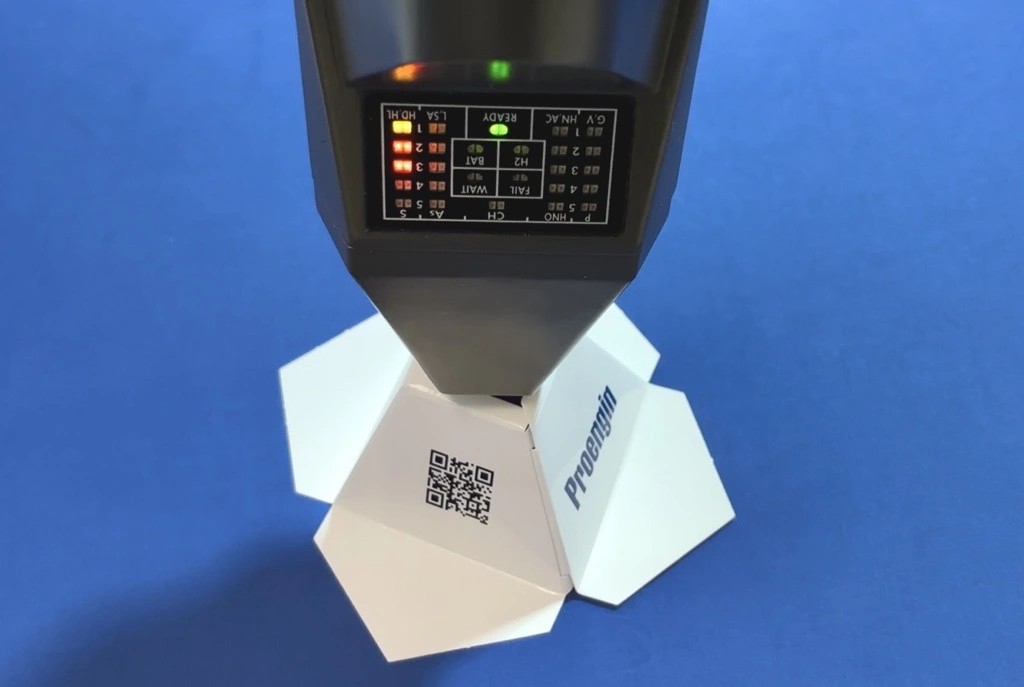
Proengin, global expert in CBRN threat management since 1972, announces the launch of its Headspace Sampler, an innovative accessory that enables forces to effectively detect low-diffusion vapours in challenging outdoor conditions.
A field challenge solved For over five decades, Proengin has tracked the constant evolution of CBRN threats and mastered their operational challenges in all forms. Field feedback has confirmed that vapor detection in windy environments remains a major challenge, even with the most sensitive instruments on the market (AP2C, AP4C, AP4C+). "The Headspace Sampler provides an immediate and concrete solution to a real detection challenge that response forces encounter daily," states Gautier Mallet, Marketing Director at Proengin.
Master All Threats: Gases, Aerosols, Vapors, Solids and Liquids With this innovation, Proengin strengthens its ability to cover the entire spectrum of CBRN threats. Combined with existing solutions like the AP4C, the Headspace Sampler enables perfect mastery of all threats, in all their forms and in the most challenging environments.
Optimize Your Operational Kit : • S4PE Kit + Headspace Sampler: multi-threat detection • Enhanced S4PF Kit + Headspace Sampler: complete mastery of all threats, including vapors in windy environments. This comprehensive approach ensures optimal preparation against evolving field threats
Innovation designed for the field The accessory stands out through its ease of use: deployable in seconds, it integrates instructions directly on the product via QR code. Its universal compatibility with all Proengin portable detectors and field durability make it a tool suited to the most demanding operational conditions. Disposable and economical, the Headspace Sampler uses materials without interfering with contamination and fits easily into existing transport cases, preserving the mobility of forces and first responders.
Immediate availability The Headspace Sampler is available now. Interested teams can contact Proengin for more information.
908 Devices announced the launch of VipIR, a 3-in-1 handheld analyzer that sets a new standard for rapid and confident field-based chemical identification of unknown bulk solids and liquids, such as narcotics, explosives, and toxic chemicals. VipIR enables customs and border personnel and hazardous response teams to simplify workflows and eliminate guesswork, accelerating decision making on scene. Eagle eyed attendees of both the IAFC Hazmat show in Baltimore, and High Intensity CBRN in Poznan will have had a chance to see the new detector in the flesh!
At the heart of VipIR is Smart Spectral Processing (SSP), a proprietary algorithm that actively integrates data from Raman spectroscopy and FTIR (Fourier Transform Infrared) spectroscopy for analysis of complex or mixed substances from just one sample. No repositioning or repeated sampling is required. SSP uses the results of one spectroscopy technology to refine or confirm the other spectroscopy technology, delivering a more accurate and reliable chemical identification of an unknown substance.
“VipIR is redefining chemical analysis at the point of need with its combination of lab-grade analytical technologies, sophisticated algorithms and a simple, smart workflow that provides one confident result,” said Kevin J. Knopp, CEO and Co-founder, 908 Devices. “This new chemical analyzer reinforces our commitment to providing frontline teams with next-generation tools that deliver confident, reliable answers.”
Other VipIR features include:
An expansive library of over 39,000 chemical spectra including drugs, toxic industrial materials, chemical warfare agents, explosives, and common chemicals
Unique SSP single sample interface integrates FTIR and Raman analysis; additional sampling methods include a flexible Raman probe and integrated vial holder
Built-in Wi-Fi and cellular connectivity enable fast data uploads, streamlined reporting and fleet management via the 908 Devices’ Team Leader app
We have been working hard to bring you all the threat news all the time, so instead of just the map and news in the magazine, we now have a brand new threat page for you on the website.
Open to all, you can find the new page on the far right of the menu bar up top. Head on over and take a look at what was happening around the world in June.
3M, a global leader in respiratory protection, is excited to announce a new facepiece option for the 3M Scott X3-21 Pro self-contained breathing apparatus (SCBA). The 3M Scott Vision C5 Facepiece with E-Z Flo C5 Regulator leverages a similar design to its fire service SCBA offering and is now approved and certified as a technical and tactical facepiece for the X3-21 Pro SCBA.
The X3-21 Pro SCBA is designed to assist law enforcement and defense personnel operating in chemical, biological, radiological, and nuclear (CBRN) environments, as well as immediately dangerous to life or health (IDLH) situations.
Now certified to the NFPA 1986 Standard on Respiratory Protection Equipment for Tactical and Technical Operations, 2023 Edition, the X3-21 Pro SCBA is tailored to meet the unique tactical and technical needs of law enforcement, urban search and rescue (US&R), hazardous materials (HAZMAT) response, and explosive ordnance disposal (EOD). The addition of the Vision C5 facepiece extends 3M’s tactical SCBA offering and makes the X3-21 Pro more versatile than ever.
“3M Scott is focused on solving the challenges of our customers,” said Pang Xiong, global product portfolio leader. “By adding the Vision C5 facepiece option, we can better meet the tactical and technical needs of those working in high-risk environments.”
Key Features of the Vision C5 Facepiece:
Wider Field of View: Assists tactical operators to maintain situational awareness.
Weapons Sighting Compatibility: Most tactical operators can achieve a sight picture with a service rifle while wearing a 3M Scott Vision C5, AV-3000 HT, or AV-3000 SureSeal facepiece.*
Enhanced Communications: Optional cutting-edge bone-conduction vibration technology and an in-mask microphone enhance two-way radio communications, helping to improve situational awareness.
The X3-21 Pro SCBA is built to last, featuring a dual-redundant pressure reducer that provides an automatic backup, increasing the overall reliability of the system. This SCBA also offers no mandatory overhaul schedule and no forced parts replacement, leading to simplified logistics and lower cost of ownership. Proudly “Made in the USA” with attention to quality and workmanship, the X3-21 Pro SCBA is designed to get the job done.
Interoperability and Low Cost of Ownership:
Compatibility: The X3-21 Pro is compatible with the 3M Scott Air-Pak X3 Pro firefighting SCBA, facilitating inter-agency and inter-regional tasks.
Cost Savings: Sharing a common 3M Scott SCBA platform between police and fire departments can lead to cost savings due to shared cylinders, air compressors, service centers, training, and fit testing.
Federal Funding Eligibility: NFPA 1986 certification provides eligibility for federal funding in programs that require equipment to possess NFPA certification.
*Based on operator’s training and experience, and equipment configuration.
Businesswire reports that Thermo Fisher Scientific, the world leader in serving science, announced that it has been awarded a five-year, $94.5 million contract by the U.S. Department of Defense (DoD) to supply the Navy with a next-generation dosimetry system alongside updated radiation health and database management software.
The U.S. Navy operates the world’s most technologically advanced naval fleet and is the largest defense user of dosimetry systems globally. With this award, Thermo Fisher will supply Navy Occupational Dosimetry System (NODS) devices along with Navy Radiation Exposure Management System (NAVREMS) software. Manufactured in Oakwood Village, Ohio, these tools support the monitoring and management of occupational radiation exposure for Naval personnel associated with nuclear-powered Navy assets, nuclear-capable shipyards, research sites, laboratories, and naval medical facilities. The advanced digital dosimetry devices, featuring integrated beta, gamma, and neutron detection capabilities, are designed to deliver precise and reliable radiation exposure monitoring.
"We are honoured to work with the U.S. Navy to help safeguard the health and safety of their personnel," said Rich McCartney, president of chemical analysis at Thermo Fisher Scientific. “This contract underscores the Navy's trust in our ability to deliver cutting-edge dosimetry technology and data management solutions. Our next-generation systems are purpose-built to provide precise, real-time radiation monitoring in the most demanding environments.”
Thermo Fisher is dedicated to providing customers with accurate chemical and radiation monitoring solutions to support safer working environments across fields like defense, healthcare, and industrial markets. This contract with the U.S. Navy marks a significant milestone in our ongoing efforts to support critical defense and safety operations.
MRIGlobal is proud to have served as prime contractor on development of two new Portable Biocontainment Units (PBCU), which were unveiled in May 2025 by the U.S. Department of Health and Human Services’ (HHS) Administration for Strategic Preparedness and Response (ASPR) during a ceremony in Washington, D.C. The PBCU is the first domestic resource for isolating and transporting patients with high-consequence infectious diseases via ground and air to specialized care facilities.
Given the immediate risks associated with possible future outbreaks, pandemics, and related bioterrorism threats, the ability to provide biocontainment in patient transport is critical. This makes the PBCU a necessary asset to the country’s ability to respond to these threats and protect global health. For the first time, the U.S. has the equipment needed to transport highly infectious disease patients safely, providing care for the patients, while protecting the medical staff and the American people.
Built upon MRIGlobal’s decades of biocontainment expertise, the PBCU allows for the isolation and biocontainment of highly pathogenic infectious disease patients and providing them medical care during transport. The interior design provides a safe environment for a full spectrum of critical care for those patients while allowing for thorough post-deployment decontamination using vaporized hydrogen peroxide. The unit also maintains containment in the event of emergency landings or mid-air rapid decompression events to ensure the safety of the medical staff and flight crew.
The week of June 23rd, MRIGlobal supported ASPR’s Tranquil Passport, a full-scale exercise to field test the PBCU in the transportation of infectious disease patients. The exercise allowed the department to test existing plans, processes, procedures, authorities, and capabilities to coordinate the movement of several patients from Canada to multiple locations within the United States. The exercise occurred over four days with coordination from local, state, federal, international, and nongovernmental partners including MRIGlobal.
“For more than a decade, the U.S. government has trusted MRIGlobal to produce mobile laboratories and flyable biocontainment units that support global health and national security. Whether asked to help evacuate Ebola doctors to receive westernized medical care or support field-forward Ebola outbreak diagnostics, MRIGlobal’s team of engineers and infectious disease experts has answered the call,” said Ian Colrain, PhD, President & CEO, MRIGlobal. “In collaboration with our primary subcontractor and partner HHI Corporation, we are proud to have led development of the PBCU and be involved in supporting the recent Tranquil Passport mission. The PBCU serves as an important asset in response to current and future infectious disease and bioterrorism threats.”
The PBCU is unique because of its ability to operate from the platform of large aircraft, including a C-130 or L-100, providing flexibility in where it can land and operate. Once on the ground, the PBCU can be loaded onto a customized trailer for ground operation and transit to a hospital. Because patients can be isolated inside the PBCU and continue to receive care, hospitals do not have to activate their biosecurity protocols.
Each PBCU can safely evacuate critically ill patients while maintaining biocontainment through a system of regulated air flow, HEPA filtration between all airspaces, and cascading pressure differentials between airspaces. The system is divided into a patient room, an anteroom, and a medical staff room. The entire system is held negative to the aircraft cargo bay and all exhausted air passes through two stage HEPA filtration to protect the flight crew. Real-time pressure monitoring with audible and visible alarms verifies desired pressure differentials while an interior camera feeds interior and exterior video monitors for constant patient monitoring. All interior walls are coated with a seamless epoxy coating formulated to ensure containment while surviving the thermal, mechanical and chemical stresses introduced during loading, flight, decontamination, and emergency landing scenarios.
###
ABOUT MRIGLOBAL For more than 80 years, MRIGlobal has improved people’s lives through scientific and engineering research, producing innovative solutions to important biological, chemical, and engineering challenges. Founded as an independent, nonprofit organization, MRIGlobal performs customized research and development services for health and defense-focused organizations. This includes expertise in clinical research support, infectious disease and biological threat agent detection, global biological engagement, in vitro diagnostics, and laboratory management and operations. Visit mriglobal.org to learn more.






 How to resolve AdBlock issue?