---
title: "Subscribers"
description: "CBRNe World provides those tasked with defending against CBRN and IED threats with the essential practical, scientific and political information. Access the current and previous issues of the magazine by registering as a member."
url: "https://cbrneworld.com/news/subscribers?start=910"
date: "2026-07-31T09:39:27+00:00"
language: "en-GB"
---
[](https://cbrneworld.com/index.php?option=com_content&view=article&id=1620:hash-oil-factory-explosion-injure-firefighters&catid=12)
## [Hash Oil Factory Explosion Injure Firefighters](https://cbrneworld.com/index.php?option=com_content&view=article&id=1620:hash-oil-factory-explosion-injure-firefighters&catid=12)
Written by Gwyn Winfield on 18 May 2020.
An explosion in downtown Los Angeles injured 11 firefighters, with more than 230 sent to put out the blaze in what has been described as a factory making cannabis oil.
Captain Erik Scott of the Los Angeles fire department said “one significant explosion” shook the neighborhood and as first responders arrived they saw firefighters emerge from the building with burns and other injuries.
Four firefighters were taken to a burns unit, two were put on ventilators due to signs of swollen airways and five were hospitalized suffering with a range of burns. The two firefighters on ventilators appeared to have inhaled superheated gases but as of around 10pm local time it seemed none of the injuries were life-threatening, said the fire department’s medical director, Marc Eckstein.
Scott described the business as a maker of “butane honey oil.” Butane is a flammable gas. Making the oil involves extracting the high-inducing chemical THC from cannabis plants to create a highly potent concentrate also known as hash oil. The oil is used in vape pens, edibles, waxes and other products.
[Emergency](https://cbrneworld.com/component/tags/tag/emergency), [Threat](https://cbrneworld.com/component/tags/tag/threat), [Chemical](https://cbrneworld.com/component/tags/tag/chemical)
[](https://cbrneworld.com/index.php?option=com_content&view=article&id=1598:smiths-detection-launches-ultraviolet-light-upgrade-kits-for-checkpoints-capable-of-killing-99-9-of-microorganisms-on-baggage-trays&catid=12)
## [Smiths Detection launches Ultraviolet Light Upgrade Kits for checkpoints capable of killing 99.9% of microorganisms on baggage trays](https://cbrneworld.com/index.php?option=com_content&view=article&id=1598:smiths-detection-launches-ultraviolet-light-upgrade-kits-for-checkpoints-capable-of-killing-99-9-of-microorganisms-on-baggage-trays&catid=12)
Written by Zoe Rutherford on 15 May 2020.
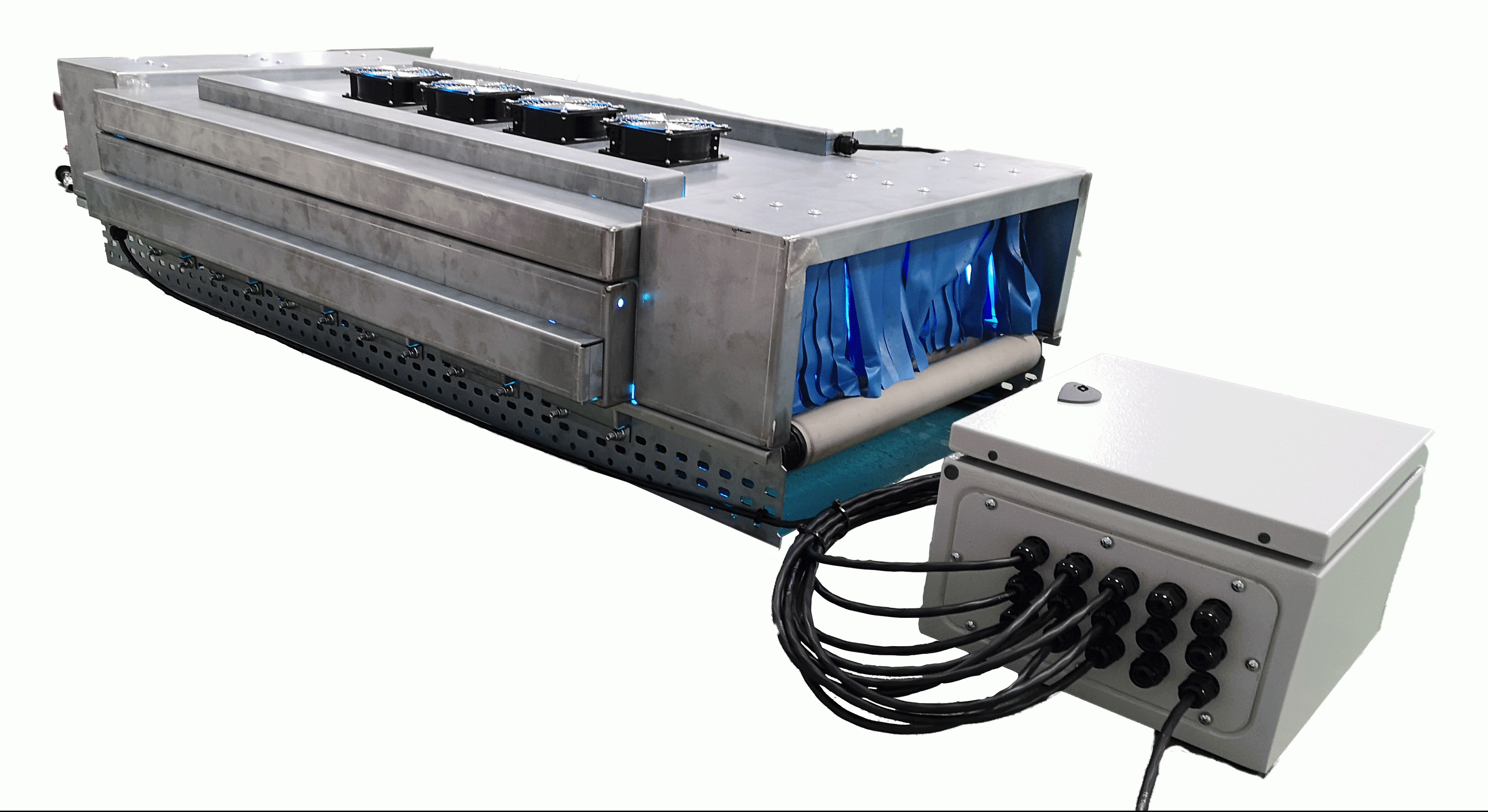
Smiths Detection today announced the launch of its new [ultraviolet (UVC)](https://www.smithsdetection.com/products/ultraviolet-light-tray-disinfection/) light kits capable of destroying up to 99.9% of microorganisms present on baggage trays at the security checkpoint. Demonstrating heightened hygiene standards will be important as airports seek to restore the confidence of travellers and staff during and after the COVID-19 pandemic. UVC is one way that airports can do this, while providing longer-term protection against bacteria or viruses.
Helping to protect passengers and staff from tactile transmission of contagious disease as they pass through security checkpoints at airports, Smiths Detection UVC kits automatically disinfect trays as they are being transported from the reclaim area back to the divest station. Thanks to its specially designed casing and other safety measures, the UVC lights pose no exposure risk to staff or passengers and can be installed quickly and easily into existing tray handling systems.
This proven technology has been successfully used for the disinfection of surfaces in industries with high hygiene requirements, such as the food and health sectors, for many years. Its application at checkpoint security will reduce the risk of contamination and therefore reassure passengers and staff about the safety of the security process.
“A trusted advisor within the industry, Smiths Detection have been working with airports globally to deliver necessary enhancements to their infrastructure that can be made in response to the pandemic,” said Global Director Aviation, Richard Thompson. “UVC lights are a practical, straight-forward way that airports can help reduce the transmission of any bacteria or virus that might be on the surface of its trays now and in the long-term.”
Trials of the solution are underway on site at airports, and it is available immediately for installation with very short lead times. If you would like to find out more, please visit [](https://www.smithsdetection.com/products/ultraviolet-light-tray-disinfection/)
[Detection](https://cbrneworld.com/component/tags/tag/detection)
[](https://cbrneworld.com/index.php?option=com_content&view=article&id=1621:factory-explosions-kills-one-injures-two&catid=12)
## [Factory Explosions Kills One Injures Two](https://cbrneworld.com/index.php?option=com_content&view=article&id=1621:factory-explosions-kills-one-injures-two&catid=12)
Written by Gwyn Winfield on 15 May 2020.
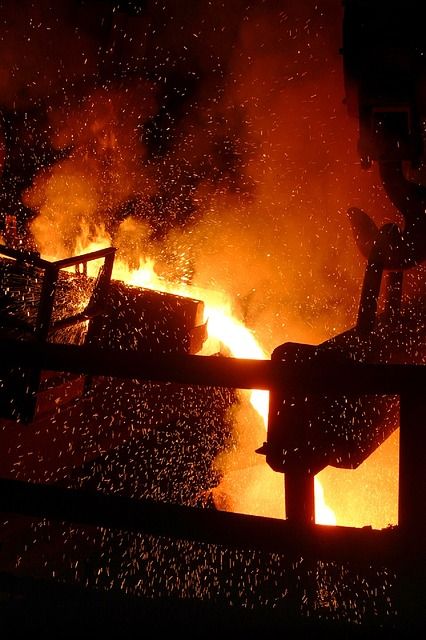
An explosion at the Adler Plastic works near Naples in Italy killed one person and injured two others.
Local media reported that the blast could be heard from several kilometres away and witnesses reported seeing a large plume of black smoke rising from the factory.
The factory had only reopened on May 4 after the Italian government eased the lockdown in the country following the coronavirus pandemic.
Italian news website TGCOM24 reports that some employees who managed to escape the factory said the blast may have been caused by a gas cylinder exploding. One person was taken to a hospital in Naples while the more critically injured person was taken to hospital in Nola on the outskirts of Naples.
The Adler Plastic works had been operating with reduced staff working in shifts in order for employees to work safely apart.
Local government officials recommended people closed windows and doors in the aftermath of the explosion as a precaution.
An investigation into the incident has been opened.
[](https://cbrneworld.com/index.php?option=com_content&view=article&id=1597:federal-resources-supporting-nation-s-nursing-homes-during-covid-19-crisis&catid=12)
## [Federal Resources Supporting Nation’s Nursing Homes During COVID-19 Crisis](https://cbrneworld.com/index.php?option=com_content&view=article&id=1597:federal-resources-supporting-nation-s-nursing-homes-during-covid-19-crisis&catid=12)
Written by Zoe Rutherford on 15 May 2020.
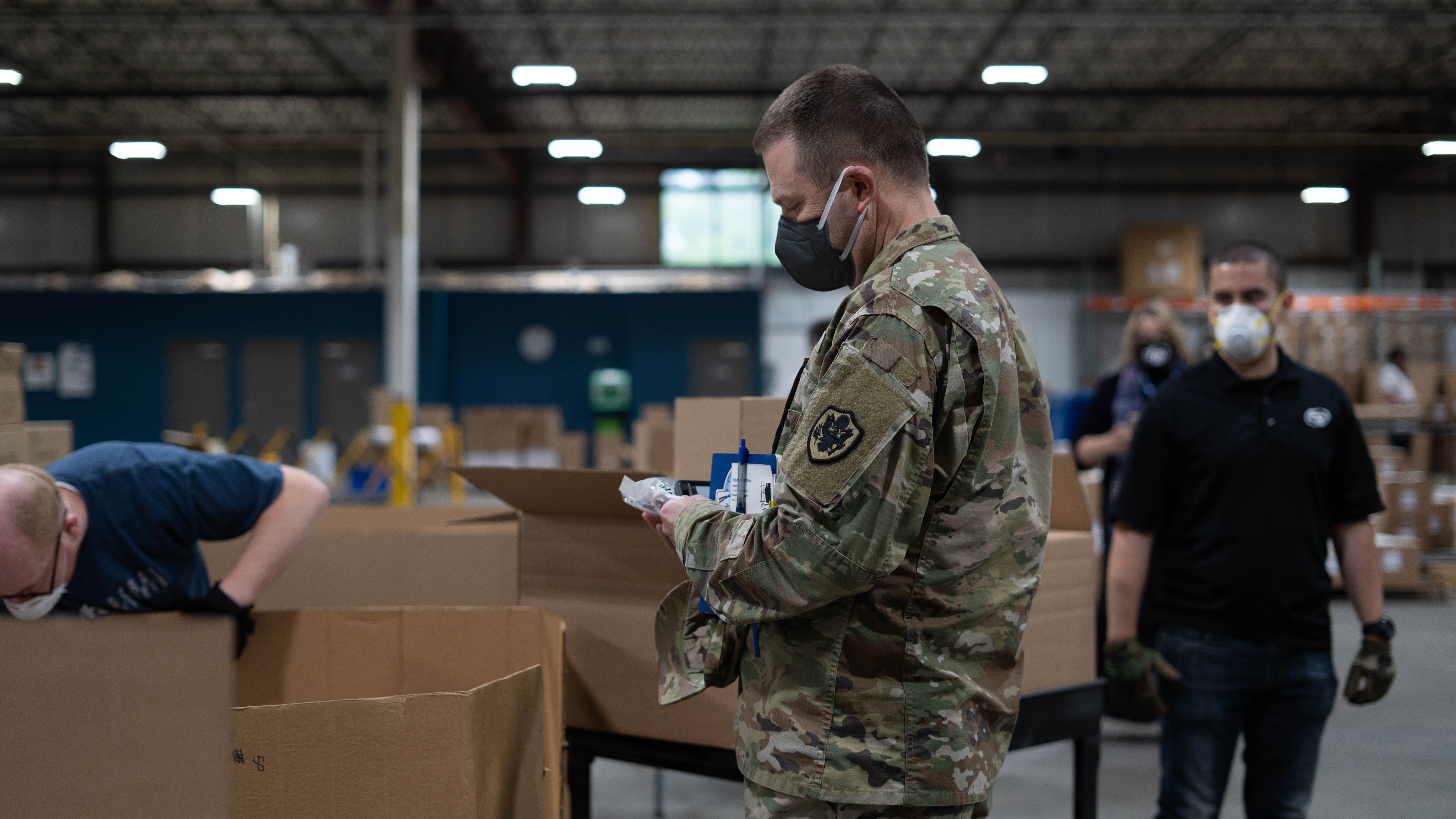
Federal Resources Supply Company was selected by the Defense Logistics Agency (DLA) to deliver kits of life-saving Personal Protective Equipment (PPE) to approximately 15,000 nursing homes across America. Responding to a request from the Federal Emergency Management Agency (FEMA) and in coordination with the Centers for Medicare and Medicaid Services (CMS), DLA awarded Federal Resources a contract to provide 1.2 million pieces of eye protection, 13.8 million surgical masks, 12.8 million gowns, and 64.4 million pairs of gloves to ensure the safety and well-being of America’s seniors during the COVID-19 pandemic.
“Federal Resources is honored to be awarded the contract to provide necessary equipment and solutions to the nation’s essential health-care workers. Those on the front line of the COVID-19 healthcare crisis are protecting America’s seniors and the loved ones of our nation. The logistical challenge of quickly delivering around 15,000 shipments of PPE pales in comparison to the challenges healthcare workers are facing daily,” said Robert McWilliams, Federal Resources President. “As the threat climate makes the jobs of those on the front lines more difficult and dangerous, we are more committed now than ever to supporting their missions and providing the equipment and solutions to keep them safe from harm.”
Federal Resources has partnered with the DLA to secure products and solutions to aid in the COVID-19 response. DLA is the nation’s combat logistics support agency, managing the global supply chain for the military and other federal agencies. In the midst of a global shortage of PPE, including surgical masks, gowns, eye protection and gloves, Federal Resources located multiple sources of supply to quickly and efficiently put critical PPE in the hands of those who need them.
DLA announced the award to Federal Resources on April 27, 2020, under the Special Operations Equipment (SOE) contract, which is a firm-fixed price, Indefinite Delivery/Indefinite Quantity (IDIQ) contract that rapidly fields various equipment including lifesaving products to the military, federal government and first responders.
Federal Resources is proud to continue its support of DLA and its customers through not only this award but with multiple mission critical solutions. For a more comprehensive review of Federal Resources’ equipment and procurement solutions in response to the COVID-19 pandemic, please visit us at [www.federalresources.com/COVID](http://www.federalresources.com/COVID).
[Equipment](https://cbrneworld.com/component/tags/tag/equipment), [Protection](https://cbrneworld.com/component/tags/tag/protection), [Biological](https://cbrneworld.com/component/tags/tag/biological)
[](https://cbrneworld.com/index.php?option=com_content&view=article&id=1596:newly-announced-fda-authorisations-for-coronavirus-tests-and-kits&catid=12)
## [Newly Announced FDA Authorisations for Coronavirus Tests and Kits](https://cbrneworld.com/index.php?option=com_content&view=article&id=1596:newly-announced-fda-authorisations-for-coronavirus-tests-and-kits&catid=12)
Written by Zoe Rutherford on 13 May 2020.
FDA Authorizes First Antigen Test to Help in the Rapid Detection of Coronavirus
The U.S. Food and Drug Administration has issued the first [emergency use authorization (EUA) for a COVID-19 antigen test](https://www.fda.gov/media/137886/download), a new category of tests for use in the ongoing pandemic. These diagnostic tests quickly detect fragments of proteins found on or within the virus by testing samples collected from the nasal cavity using swabs. The EUA was issued late Friday to Quidel Corporation for the [Sofia 2 SARS Antigen FIA](https://www.fda.gov/media/137886/download). This test is authorized for use in high and moderate complexity laboratories certified by [Clinical Laboratory Improvement Amendments (CLIA)](https://www.cms.gov/Regulations-and-Guidance/Legislation/CLIA), as well as for point-of-care testing by facilities operating under a CLIA Certificate of Waiver.
This is just the first antigen test to be authorized and we expect more to follow. We also anticipate providing an EUA template for antigen tests, similar to ones we’ve [released for other test types](https://www.fda.gov/emergency-preparedness-and-response/mcm-legal-regulatory-and-policy-framework/emergency-use-authorization), to help manufacturers streamline submissions and help expedite our review and issuance of additional EUAs.
Antigen tests will play a critical role in the fight against COVID-19 and we will continue to offer support and expertise to help with the development of accurate tests, and to review and monitor marketed tests to ensure accuracy, while balancing the urgent need for these critical diagnostics.
FDA Authorizes First Coronavirus Diagnostic Test Using At-Home Collection of Saliva Specimens
The U.S. Food and Drug Administration authorized the first diagnostic test with the option of using home-collected saliva samples for COVID-19 testing. Specifically, the FDA [issued an emergency use authorization](https://www.fda.gov/media/137773/download) (EUA) to Rutgers Clinical Genomics Laboratory for their COVID-19 laboratory developed test (LDT), which had been previously added to the high complexity molecular-based LDT “umbrella” EUA, to permit testing of samples self-collected by patients at home using the Spectrum Solutions LLC SDNA-1000 Saliva Collection Device. This announcement builds on last month’s EUA for the [first diagnostic test with a home-collection option](https://www.fda.gov/news-events/press-announcements/coronavirus-covid-19-update-fda-authorizes-first-test-patient-home-sample-collection), which uses a sample collected from the patient’s nose with a nasal swab and saline.
The EUA for Rutgers Clinical Genomics Laboratory’s molecular test permits testing of a saliva sample collected from the patient using a designated self-collection kit. Once patients collect their saliva sample, they return it to the Rutgers Clinical Genomics Laboratory in a sealed package for testing.
The Rutgers Clinical Genomics Laboratory test is currently the only authorized COVID-19 diagnostic test that uses saliva samples to test for The authorization is limited to testing performed at the Rutgers Clinical Genomics Laboratory using their molecular LDT COVID-19 authorized test for saliva specimens collected using the Spectrum Solutions LLC SDNA-1000 Saliva Collection Device. It is important to note that this is not a general authorization for at-home collection of patient samples using other collection methods, saliva collection devices, or tests, or for tests fully conducted at home.
[Identification](https://cbrneworld.com/component/tags/tag/identification), [Biological](https://cbrneworld.com/component/tags/tag/biological)
[](https://cbrneworld.com/index.php?option=com_content&view=article&id=1595:radiation-detecting-plastic-gets-ingredient-to-stay-in-the-clear&catid=12)
## [Radiation-detecting plastic gets ingredient to stay in the clear](https://cbrneworld.com/index.php?option=com_content&view=article&id=1595:radiation-detecting-plastic-gets-ingredient-to-stay-in-the-clear&catid=12)
Written by Zoe Rutherford on 11 May 2020.
Researchers at Sandia National Laboratories have identified a straightforward change to the formula for radiation-detecting plastic. The change prevents “fogging,” which reduces the lifetime of the plastics used to detect nuclear material transiting through the U.S. Department of Homeland Security’s radiation detectors.
The change also fits well into existing manufacturing processes for the plastic, so manufacturers have been able to scale up production rapidly to make large sheets capable of replacing fogged detectors.
These radiation detectors are sheets of polyvinyltoluene (PVT) plastic, 2 inches thick and 6 to 8 feet high, deployed in traffic lanes at ports of entry. The detection component in the plastic is a fluorescent molecule that glows when radiation hits the material. Light collectors mounted on the top of the sheet gather light from the glowing molecules; the amount of light they register reflects the amount and energy of radiation that hit the material, the number of light particles coming from the fluorescent molecule and the efficiency of light transport through the plastic.
“For reliable radiation measurements, it’s of the utmost importance that the material is optically transparent and remains that way for decades,” Sandia materials scientist Nick Myllenbeck said.
However, analysts that use PVT noticed that the radiation detection performance of the plastic was starting to degrade after the plastic had spent a few years in the field. By eye, they saw what appeared to be fog droplets forming inside the material. These droplets scattered light from the glowing molecules and prevented some of the light from reaching the detectors, reducing the detector’s sensitivity over time.
**Microscopy reveals fog source**
To figure out how to prevent this fogging, Sandia researchers, working with colleagues at Lawrence Livermore, Pacific Northwest and Oak Ridge national laboratories, first needed to know how the fog formed. They suspected it appeared in the material much like it does in air — by water condensing as the air temperature drops overnight.
The researchers put small samples of the radiation-detecting PVT plastic in a humid chamber and cycled the temperature from warm to cool to mimic daytime and nighttime temperatures. The samples absorbed only about 0.03% water by mass, but during cooling cycles, the researchers saw the fog-like droplets appear in the material.
When they examined the material under an optical microscope, however, they realized the droplets were microscale defects in the plastic caused by condensed water absorbed from the air.
They eventually realized that the defects formed in two phases. During the first few warm and cool cycles, the fog-like defects appear to be completely reversible upon heating or drying out the plastic. However, if the water remains in the plastic and the material experiences enough temperature cycles, the defects grow and become permanent. Both defect types can adversely affect the performance of plastic scintillators in the field, Myllenbeck noted.
**Non-fogging formula easy for manufacturers to produce at scale**
Once the researchers knew how the fog formed, they hypothesized that they could add a chemical component to the plastic to keep water from forming defects inside. Materials scientists from Sandia and Lawrence Livermore, sharing funding from the Department of Homeland Security Countering Weapons of Mass Destruction Office, experimented with various additives to stabilize water by means of hydrogen bonding to the additive.
At Sandia, Myllenbeck and his colleagues started with the current PVT formula and added one ingredient: a commercially-available additive that can interact favorably both with water and the plastic matrix. When they tested the new material under accelerated temperature and humidity conditions, the researchers did not see any sign of fogging after tens of cycles. In contrast, the standard plastic would fog severely after just one cycle. Myllenbeck suspects that the water inside the plastic clings to the additive rather than to other water molecules, which prevents droplet formation, and thus light scattering defects.
“This one ingredient change is a huge advantage to manufacturers,” he said. “They only have to add a small amount of this compound to their existing formula, with minor process modifications, to produce a nonfogging material that performs identically to the existing plastic.”
As a demonstration of scalability, a property that had previously eluded the multi-lab team, a PVT manufacturer working with the multilab team has produced numerous 2/3-scale parts with the new formula. They plan in the next several months to make full-scale panels suitable for field deployment, Myllenbeck added.
[Detection](https://cbrneworld.com/component/tags/tag/detection), [Equipment](https://cbrneworld.com/component/tags/tag/equipment), [CBRNe](https://cbrneworld.com/component/tags/tag/cbrne), [Radiation](https://cbrneworld.com/component/tags/tag/radiation)
[](https://cbrneworld.com/index.php?option=com_content&view=article&id=1594:additional-black-hornet-contract-for-flir&catid=12)
## [Additional Black Hornet Contract for FLIR](https://cbrneworld.com/index.php?option=com_content&view=article&id=1594:additional-black-hornet-contract-for-flir&catid=12)
Written by Zoe Rutherford on 11 May 2020.
FLIR Systems, Inc has won an additional $20.6 million contract from the U.S. Army to deliver its FLIR Black Hornet 3 Personal Reconnaissance Systems (PRS). The advanced nano-unmanned aerial vehicles (UAVs) will support platoon- and small unit-level surveillance and reconnaissance capabilities as part of the Army’s Soldier Borne Sensor (SBS) program.
In January 2019, the U.S. Army awarded FLIR an initial $39.7 million contract for Black Hornet 3’s to support the SBS program. The company is currently delivering those systems for fielding across the force.
Extremely light, nearly silent, and with a flight time up to 25 minutes, the combat-proven, pocket-sized Black Hornet PRS transmits live video and HD still images back to the operator. Its information feed provides soldiers with immediate covert situational awareness to help them perform missions more effectively. FLIR has delivered more than 12,000 Black Hornet nano-UAVs to defense and security forces worldwide.
“Black Hornet has proven to be a game-changing technology – a small package that can deliver a big edge on the battlefield,” said Roger Wells, VP and general manager of the Unmanned Systems & Integrated Solutions business line at FLIR. “We’re proud to continue supporting the U.S. Army’s Soldier Borne Sensor program. Enabling warfighters with a full-range of integrated unmanned solutions, both in the air and on the ground, is a strategic objective FLIR shares with the military.”
The award-winning Black Hornet is designed and built by FLIR in Norway. Deliveries will begin in late 2020. To learn more about the FLIR Black Hornet® PRS, visit [flir.com/products/black-hornet-prs/](https://www.flir.com/products/black-hornet-prs/)
[Equipment](https://cbrneworld.com/component/tags/tag/equipment), [Contract](https://cbrneworld.com/component/tags/tag/contract), [Drone](https://cbrneworld.com/component/tags/tag/drones)
## [Decontaminating N95s with UV](https://cbrneworld.com/index.php?option=com_content&view=article&id=1593:decontaminating-n95s-with-uv&catid=12)
Written by Gwyn Winfield on 06 May 2020.
CS Medical is pleased to announce the distribution agreement with AirClean Systems to offer the AirClean UV Light Box.
The UV Light Box is just another example of when collaboration between companies can provide a solution in a time of need. Shortwave UV light has been used for years to decontaminate surfaces. The growing need to decontaminate N95 respirators has placed shortwave UV light as an alternative to other chemical based methods. AirClean Systems has been manufacturing workstations with shortwave light for more than 20 years.
CS Medical scientists and engineers worked with AirClean Systems engineers to take the known research data and apply it. The collaboration between AirClean Systems and CS Medical has developed the UV light box for decontamination of N95 respirators. CS Medical and AirClean Systems have been working together for more than 10 years to deliver our customer base solutions for proper ultrasound probe storage with the CleanShield Ultrasound Probe Storage Cabinets. “The UV light box is another example of how small businesses can work together and provide solutions to emerging healthcare problems. CS Medical is committed to helping healthcare in this time of need and with this partnership we provide another piece to the overall solution of risk reduction.” stated Mark Leath, President CS Medical, LLC.
The UV Light Box is available in two widths and provide the decontamination of N95 respirators in a total cycle time of 60 minutes, 30 minutes per side.
[](https://cbrneworld.com/index.php?option=com_content&view=article&id=1590:czech-mayors-in-hiding-due-to-mystery-russian-poison-plot&catid=12)
## [Czech Mayors in Hiding Due to Mystery Russian Poison Plot](https://cbrneworld.com/index.php?option=com_content&view=article&id=1590:czech-mayors-in-hiding-due-to-mystery-russian-poison-plot&catid=12)
Written by Zoe Rutherford on 04 May 2020.
Three Czech political figures have gone into hiding after it was believed they were being targeted by a Russian assasin in retaliation for affronts to Moscow.
It was reported that a Russian man had entered Prague a few weeks ago with an unspecified quantity of ricin in his suitcase, intent on using it against a number of public figures in the Czech Republic. The man was apparently picked up by a car bearing Russian diplomatic plates and taken to the Russian embassy, not far from one of the suspected targets office.
After the story was published in Czech magazine Respect, it soon became public knowledge that three Czech citizens, Prague’s Mayor Zdenek Hrib, Prague 6th District Mayor Ondrej Kolar, and political analyst Pavel Novotny, have actually been under police protection since early April due to the threat. The claims of the plot to poison has been categorically denied by Moscow.
The exact reasons for the alleged plot are unknown, but it is believed it is related to actions by the men seen as anti-Kremlin. A statue of a Soviet Marshal Ivan Konev was recently removed, and a square in front of the Russian embassy in Prague was renamed the square after Boris Nemtsov, the outspoken critic of Vladimir Putin, who was was assassinated in 2015. It is suggested that these actions provocated Russian into action.
The information for the story in Respect magazine has been called scarcely sourced, unverified, and unfactual. However, one must think there has to be something to it if 3 people are under 24 hour police guard.
[Threat](https://cbrneworld.com/component/tags/tag/threat), [CBRNe](https://cbrneworld.com/component/tags/tag/cbrne), [Biological](https://cbrneworld.com/component/tags/tag/biological)
[](https://cbrneworld.com/index.php?option=com_content&view=article&id=1588:nasa-developed-ventilator-authorized-by-fda-for-emergency-use&catid=12)
## [NASA-Developed Ventilator Authorized by FDA for Emergency Use](https://cbrneworld.com/index.php?option=com_content&view=article&id=1588:nasa-developed-ventilator-authorized-by-fda-for-emergency-use&catid=12)
Written by Zoe Rutherford on 01 May 2020.
A new high-pressure ventilator developed by NASA engineers and tailored to treat coronavirus (COVID-19) patients today was approved by the Food and Drug Administration (FDA) for use under the FDA's ventilator Emergency Use Authorization.
Called VITAL (Ventilator Intervention Technology Accessible Locally), the device was developed by engineers at NASA's Jet Propulsion Laboratory (JPL) in Southern California to free up the nation's limited supply of traditional ventilators so they may be used on patients with the most severe COVID-19 symptoms.
"This FDA authorization is a key milestone in a process that exemplifies the best of what government can do in a time of crisis," said NASA Administrator Jim Bridenstine. "This ventilator is one of countless examples of how taxpayer investments in space exploration - the skills, expertise and knowledge collected over decades of pushing boundaries and achieving firsts for humanity - translate into advancements that improve life on Earth."
The Office of Technology Transfer and Corporate Partnerships at Caltech, which manages JPL for NASA, is offering a [free license](https://medeng.jpl.nasa.gov/covid-19/ventilator/) for VITAL and is reaching out to the commercial medical industry to find manufacturers for the device.
"Now that we have a design, we're working to pass the baton to the medical community, and ultimately patients, as quickly as possible," said Fred Farina, chief innovation and corporate partnerships officer at Caltech. "To that end, we are offering the designs for licensing on a royalty-free basis during the time of the pandemic."
The Emergency Use Authorization allows for use of the device specifically for COVID-19 patients, with the aim of addressing the acute demand for ventilators during the coronavirus pandemic. Like all ventilators, VITAL requires patients to be sedated and have an oxygen tube inserted into their airway to breathe.
"Fighting the virus and treating patients during this unprecedented global pandemic requires innovative approaches and action. It also takes an all-hands-on-deck approach, as demonstrated by the NASA engineers who used their expertise in spacecraft to design a ventilator tailored for very ill coronavirus patients. This example shows what we can do when everyone works together to fight COVID-19," said FDA Commissioner Stephen Hahn. "We believe today's action will increase availability of these life-saving medical devices. The FDA will continue to add products to this emergency use authorization, as appropriate, during this pandemic to facilitate an increase in ventilator inventory."
Prior to the FDA's review, the VITAL prototype passed a critical test April 21 at the Icahn School of Medicine at Mount Sinai in New York. VITAL poses several benefits in the national response to COVID-19. It can be built faster and maintained more easily than a traditional ventilator, and is composed of far fewer parts, many of which are currently available to potential manufacturers through existing supply chains. Its flexible design means it also can be modified for use in field hospitals being set up in convention centers, hotels and other high-capacity facilities across the country and around the globe. Intended to last three or four months, the new device wouldn't replace current hospital ventilators, which can last years and are built to address a broader range of medical issues.
"It's been exhilarating coming up with VITAL's design," said Michelle Easter, a mechatronics engineer at JPL who worked on developing the device. "Now that we have FDA approval, we're looking forward to seeing companies license this technology and share it with the rest of the world."
To learn more about how NASA is helping in the national response to COVID-19, visit:
[Equipment](https://cbrneworld.com/component/tags/tag/equipment), [Biological](https://cbrneworld.com/component/tags/tag/biological), [Technology](https://cbrneworld.com/component/tags/tag/technology)
[](https://cbrneworld.com/index.php?option=com_content&view=article&id=1587:levrum-covid-19-effects-simulator&catid=12)
## [Levrum COVID-19 Effects Simulator](https://cbrneworld.com/index.php?option=com_content&view=article&id=1587:levrum-covid-19-effects-simulator&catid=12)
Written by Zoe Rutherford on 30 April 2020.
[Levrum](https://covidsim.levrum.com/) has created a COVID-19 effects simulator to help organizations gauge the impacts of different epidemiology parameters for the pandemic on the organization’s ability to respond, based upon disease incidence progression in the community and the rates of exposure and transmission to operations staff. The simulator has [seven parameters](https://covidsim.levrum.com/help) to simulate the impact of COVID-19. Levrum is providing this free of charge to fire and EMS agencies.
**About Levrum, Inc.**
Levrum, Inc. is the leading provider of advanced analytics software tools and services for fire /EMS agencies, based on state-of-the-art machine learning and simulation technology. Levrum’s integrated suite of tools allows leaders to address the unique challenges facing their jurisdiction. These tools ensure the data quality, help mitigate the impact of growth, and optimize all aspects of deployment. The suite standardizes accreditation analyses and aids in visual communication with staff, stakeholders and the public through insightful charts, maps, and graphs. Levrum’s leadership team and staff have extensive backgrounds in machine learning, software systems and fire/EMS command and operational roles.
For more information, please email [](https://cbrneworld.com/javascript:/*%20This%20email%20address%20is%20being%20protected%20from%20spambots.*/)[](https://cbrneworld.com/javascript:/*%20This%20email%20address%20is%20being%20protected%20from%20spambots.*/) or call 541-714-5882.
[Biological](https://cbrneworld.com/component/tags/tag/biological)
[](https://cbrneworld.com/index.php?option=com_content&view=article&id=1586:simple-covid-19-home-test-under-development-by-manchester-biotech-team&catid=12)
## [Simple COVID-19 home-test under development by Manchester biotech team ](https://cbrneworld.com/index.php?option=com_content&view=article&id=1586:simple-covid-19-home-test-under-development-by-manchester-biotech-team&catid=12)
Written by Zoe Rutherford on 30 April 2020.
World-leading Manchester biotech researchers are working towards developing a test for COVID-19 that could be used at home like a domestic pregnancy test.
This prototype test is based on the fact sugars coat all human cells and could be used in the fight to detect infectious agents like coronavirus.
This new screening new approach can help identify the COVID-19 virus - not by its genetic code, which can mutate, but by using its reliance on chains of sugars on human cells, which are constant.
Sugars coat all cells in the human body and they are the first layer a bacteria or virus encounters. Professor Field and his team are interested in how to use the sugars to identify and even block a virus from penetrating the cell – and so preventing further infection.
The simple-to-use testing device has the potential to be used in 'hotspot' communities like frontline NHS staff allowing doctors and nurses to easily test at home to see if they have COVID-19 symptoms or not before going to work.
Communities associated with a building or geographical location which require increased safeguarding such as, hospitals, care homes or workplaces, can quickly test visitors.
Professor Rob Field and his team at The University of Manchester are now working at pace with spin-out company Iceni Diagnostics to get their new test ready and officially validated ready for the autumn. An autumn launch this year is key, as the application of this screening kit can support diagnoses of 'flu vs coronavirus', given the typical trend of flu season which can initially present similar symptoms.
The tester would be very useful to ensure people with seasonal flu aren't confused with people having suspected COVID-19 and the consequences of having to self-isolate and create a new round of disruption to society and the economy.
Prof Field said: “Our existing prototype product for influenza can detect the virus in less than 20 minutes and could be adapted to identify other pathogens such as coronavirus.
“Respiratory viruses invade the body through cells in the airways and lungs. These cells are covered in a coat of sugar chains, known as glycans, which are used for normal function of human tissues. Viruses can utilise these glycans as part of the infection process.”
This process can also be used in reverse to identify the virus in saliva or nasal fluids, said Professor Field, a world expert in glycoscience at the Manchester Institute of Biotechnology (MIB) - and his specialist company has developed this diagnostic technique that uses an artificial glycan receptor to capture a virus.
Professor Field added: “Right now, everybody is talking about a vaccine for coronavirus but vaccine development, validation, safety-testing, manufacture, regulatory approval and deployment is a time-consuming process.
“A low-cost, easy to use screening test that can be performed at the point of care would be an ideal way to limit initial disease transmission in the community and at points of entry to hospitals, or at national borders, for instance.
“Current COVID-19 tests are largely based on PCR (polymerase chain reaction) that requires a laboratory setting for analysis and relies on prior knowledge of the viral genetic code. This code can change as the virus evolves, potentially limiting the effectiveness of the test.
“The Iceni Diagnostics approach uses glycan recognition, which is unaffected by seasonal variation in the genetic code, and can be offered as a handheld home or field-based test.”
Professor Field and his dedicated team have already developed a series of prototype products that can specifically detect pathogens such as Norovirus and different strains of influenza in less than 20 minutes. The team based at MIB will be working with Iceni Diagnostics to further develop these tests in the coming months.
The hand-held device currently under development uses lateral flow – like a home pregnancy test – to give a simple yes/no answer. It requires no refrigeration and no training, meaning the test is usable in any location, by any person, in order to detect flu or other pathogens.
“The current Iceni Diagnostics products detect a single virus. However, the next generation of diagnostics will enable the detection and discrimination of a series of pathogens that give rise to similar symptoms.
“This would enable, for example, a distinction between flu and COVID-19 in a single sample which increases the versatility and robustness of the diagnosis. Additionally, the way the virus interacts with its glycan receptor makes it seasonally consistent, so, even if the virus genetic code mutates, it will still be detected – meaning the Iceni Diagnostics’ test should remain effective in the longer term.”
Professor Field says that the device under development holds huge promise for changing the way we manage global disease: “This new approach, which is based on host-pathogen glycan recognition could potentially result in a more universal detection technique, crucial in early diagnostics of outbreaks.”
[Detection](https://cbrneworld.com/component/tags/tag/detection), [Biological](https://cbrneworld.com/component/tags/tag/biological), [Technology](https://cbrneworld.com/component/tags/tag/technology)
[](https://cbrneworld.com/index.php?option=com_content&view=article&id=1585:obituary-marty-malin&catid=12)
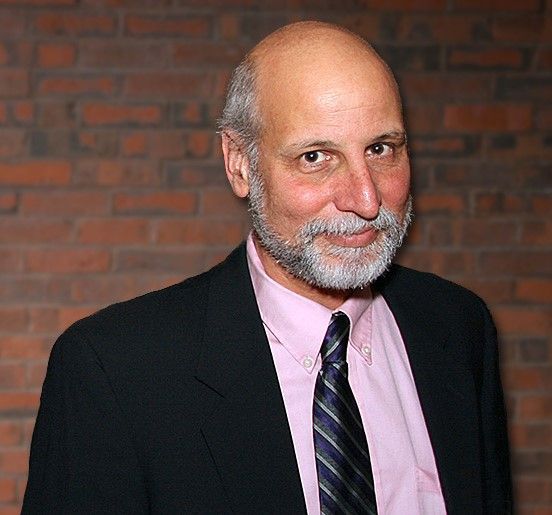
## [Obituary - Marty Malin](https://cbrneworld.com/index.php?option=com_content&view=article&id=1585:obituary-marty-malin&catid=12)
Written by Gwyn Winfield on 29 April 2020.
The Middlebury Institute of International Studies [announced ](https://www.nonproliferation.org/in-remembrance-of-martin-b-malin/?fbclid=IwAR2-dLSE2uRc2ouuQ5dS2EFzZbHbd7ekfjERdzgAUdPhjOM5zHhBv570wxI)the recent passing of Dr. Martin (Marty) Malin, who served for many years as the Executive Director of the Project on Managing the Atom at Harvard University’s Belfer Center. Marty was a distinguished scholar on arms control and nonproliferation issues, especially those pertaining to the Middle East. He was a superb editor and involved in the publication of Preventing Black Market Trade in Nuclear Technology.
For many in the community, particularly those who had the privilege of working at some point with the Belfer Center—including CNS’s Ian J. Stewart, Chen Zak Kane, and others—he was a supportive and caring mentor. Many of today’s nonproliferation scholars and practitioners around the world owe him a debt of gratitude for his leadership, insight, and approach to the challenging issues of our work.
## Schema
```json
{ "@context": "https://schema.org", "@type": "BreadcrumbList", "itemListElement": [ { "@type": "ListItem", "position": 1, "name": "News", "item": "https://cbrneworld.com/news" }, { "@type": "ListItem", "position": 2, "name": "Subscribers", "item": "https://cbrneworld.com/news/subscribers" } ] }
```